The Handshake in the Dark
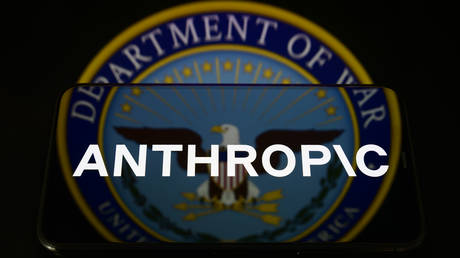
The fluorescent hum of a government office is a specific kind of silence. It is the sound of high-stakes bureaucracy, where ink on a page can move armies or shift the tectonic plates of global industry. Not long ago, in a room likely very much like that one, a partnership was born. It wasn't the kind of deal that makes a splashy Super Bowl ad. It was a transfer of power. Anthropic, a company built on the lofty, almost religious promise of "AI safety," handed the keys to its most sophisticated models to the United States Department of Defense.
It seemed like a triumph of alignment. The private sector’s genius meeting the public sector’s necessity. But then the wind changed. Now, in the sterile light of a courtroom, the architects of that intelligence are saying something that should make every citizen lean in: they have no idea what happens after the handoff.
The legal battle currently unfolding isn't just about contracts or intellectual property. It is about the terrifying realization that once you teach a machine to think, you cannot tell it who to listen to. Anthropic is effectively arguing that they are the blacksmiths who forged a legendary sword, delivered it to the king, and are now legally absolved if the king decides to use it on his own shadow—or his own people.
The Ghost in the Contract
Consider a hypothetical engineer named Elena. She spent three years at Anthropic fine-tuning the "constitutional" guardrails of their AI. She worked late nights to ensure the model wouldn't help a teenager build a bomb or a bad actor spread biological terror. To Elena, the code is a child she taught to be good. She trusts the math. She believes in the safety layers.
But then the Pentagon plugs that same model into a massive, classified data stream. They aren't asking it to write poetry. They are asking it to identify "anomalies" in drone surveillance. They are asking it to predict "adversarial intent" in a crowded city square half a world away. At that moment, Elena’s guardrails become a secondary concern to the mission.
The core of the current lawsuit reveals a gaping hole in how we govern the future. Anthropic’s defense rests on a startling admission of impotence. They claim that once the model is "on-premises"—running on the government’s own secure servers—the company loses the digital leash. They can’t see what the AI is doing. They can’t pull the plug. They are, by their own admission, blind to the actions of their own creation.
This is the "Black Box" problem, but with a military-grade twist. We aren't just talking about a recommendation algorithm getting it wrong on YouTube. We are talking about the most powerful kinetic force on Earth using a tool that its own creators say they can no longer supervise.
The Myth of the Neutral Tool
There is an old, tired argument that technology is neutral. A hammer can build a house or break a skull. It depends on the hand that holds it.
That logic fails the moment the hammer starts deciding where to swing.
AI is not a hammer. It is a collaborator. When the Pentagon uses these models, they are leaning on the machine’s "reasoning" to make sense of a world too fast for human eyes. The stakes are invisible until they aren't. They are invisible in the milliseconds it takes for an automated system to flag a truck as a threat. They are invisible in the lines of code that prioritize "mission success" over "collateral risk" because a human operator adjusted a single slider in a user interface.
Anthropic marketed itself as the "safe" alternative to the move-fast-and-break-things culture of its competitors. Their brand was built on the idea that they could contain the fire. By taking the Pentagon’s money and then claiming they have no control over the outcome, they have exposed the central fiction of the AI industry: the idea that safety is a feature you can install and then forget about.
A Language of Evasion
In the courtroom, the language is precise and bloodless. Lawyers speak of "liability shields" and "sovereign immunity." They discuss whether a software provider can be held responsible for the "downstream applications" of their product.
But translate that into human terms. If a self-driving car company sold a fleet to a city and then told the mayor, "We don't know how it will drive on your streets, and we aren't responsible if it ignores the red lights," we would call it a scandal. We would call it a public safety crisis.
When it's the Pentagon and AI, we call it "national security."
The terrifying truth is that we are watching a massive buck-passing exercise. The government wants the edge that AI provides, and they want it without the friction of private-sector oversight. The tech companies want the massive defense contracts—the kind of money that ensures their survival in a brutal market—but they don't want the moral or legal weight of what that money buys.
So they build a wall of paperwork.
The Quiet Room
Imagine the quiet room where the final decision is made. Not the decision to buy the AI, but the decision to act on its suggestion.
There is an officer there. Let’s call him Miller. He is tired. He has three different screens showing him data he barely understands. The AI—the one forged by the best minds in San Francisco, the "safe" one—gives him a 74% probability that a target is behind a specific door.
Miller has been told this machine is the pinnacle of human achievement. He has been told it is more objective than he is. He presses a button.
If the machine was wrong, who failed? Not Anthropic; they said they couldn't see what Miller was doing. Not the Pentagon; they followed the "best available data."
The failure disappears into the gap between the two.
The Mirror of Our Own Ambition
We often talk about the "alignment" problem—the challenge of making sure AI wants what humans want. But this legal battle proves we haven't even solved the "human alignment" problem. We can't even agree on who is in charge when the machine is running.
Anthropic is not the villain of this story, nor is the Pentagon. They are both acting according to their nature. One seeks to innovate and protect its shareholders; the other seeks to dominate a digital battlefield. The tragedy is the assumption that these two goals could ever result in something "safe."
We are currently building a world where the most consequential decisions—life, death, freedom, surveillance—are being outsourced to systems that are legally unanchored. We are creating a new class of power that exists in the "undefined" space of a contract.
It is a comfortable space for lawyers. It is a profitable space for executives. But for the rest of us, it is a void.
The End of the Beginning
The court will eventually rule. There will be a settlement or a dismissal. The news cycle will find a new shiny object to chase. But the precedent is already set. The hand has been shaken. The models have been delivered.
We have entered an era where the creators of the world’s most powerful technology are formally declaring their own helplessness. They are telling us, under oath, that they have built something they can no longer guide. They have handed over the fire and walked away from the hearth.
As the sun sets over the Potomac and the data centers in Virginia hum with the labor of a billion artificial neurons, the silence is heavier than it used to be. It is the silence of a driverless car accelerating into the dark, with the mechanics standing on the curb, washing their hands, and wondering aloud where it might be headed.
The ink is dry. The machine is awake. And the architects are already heading for the exit.