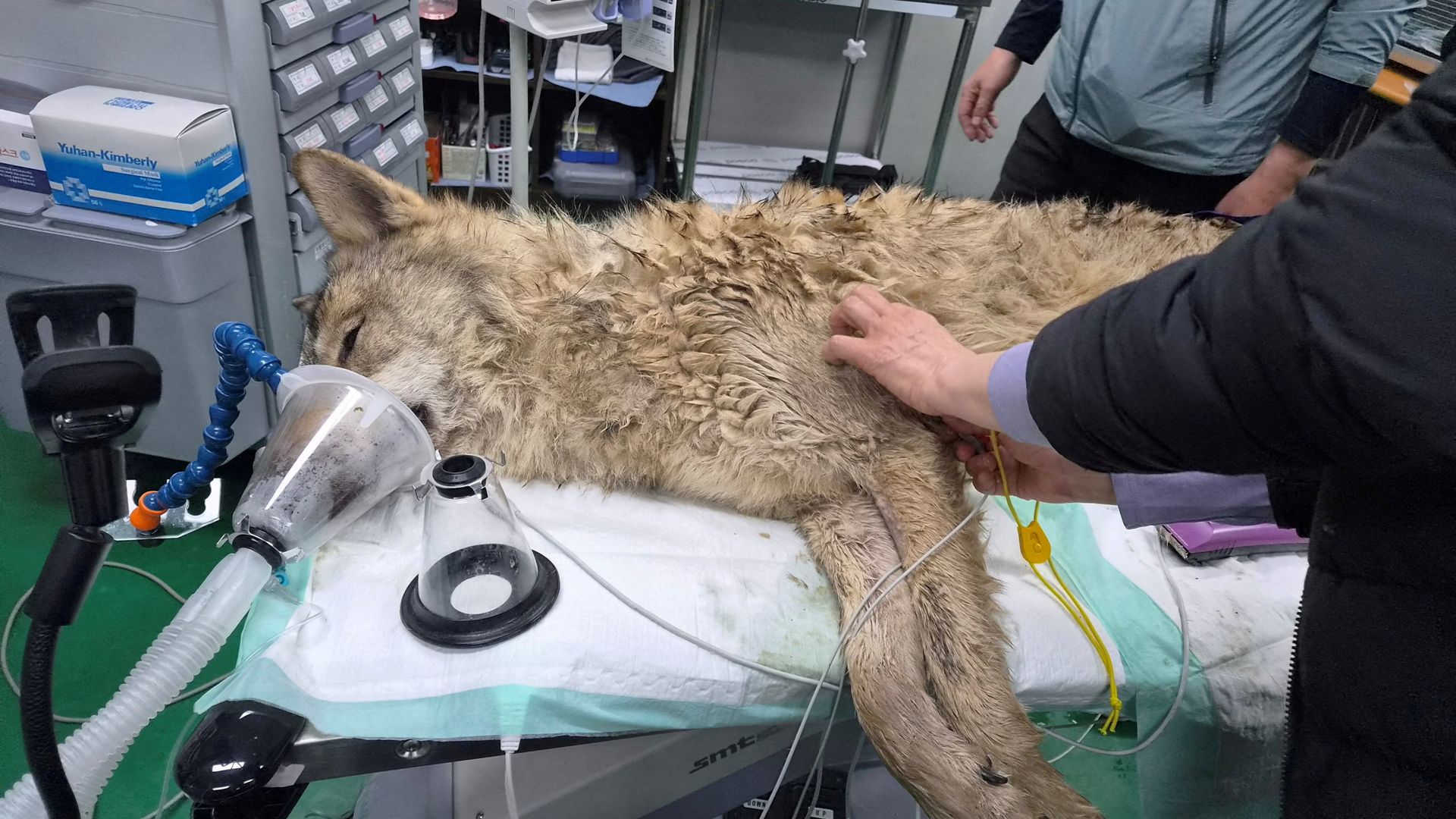
The search for Castor, the wolf-dog whose disappearance triggered a massive online mobilization, has ended. For nearly two weeks, social media feeds were dominated by grainy sightings and desperate pleas for help. Now that the animal has been located and secured, the focus shifts from the relief of a safe return to the unsettling reality of how the hunt unfolded. This was not a standard search-and-rescue operation. It was a chaotic, crowdsourced spectacle that nearly ended in tragedy.
Castor was found on the outskirts of the suburban sprawl he had been navigating since his escape. While the immediate danger has passed, the incident highlights a growing friction between digital activism and wildlife management. The very people who claimed to want to save him were often the ones putting him at the greatest risk.
The Illusion of the Digital Savior
When a charismatic animal goes missing, the internet reacts with a predictable, high-octane urgency. Within hours of Castor’s escape, Facebook groups and local Discord servers transformed into amateur command centers. This is the new baseline for lost pet scenarios, but Castor was never just a pet. As a high-content wolf-dog, he occupies a legal and biological gray area that most "rescuers" failed to grasp.
The problem with thousands of digital eyes is that they rarely come with professional restraint. People began flooded the areas of reported sightings, armed with nothing but good intentions and smartphones. They wanted the "hero shot"—the photo of the elusive beast that would validate their participation in the hunt. In reality, they were creating a wall of human scent and noise that kept the animal in a state of constant flight.
Every time a group of well-meaning citizens descended on a park or a woodlot, they pushed Castor further into unfamiliar, dangerous territory. They weren't helping him find his way home. They were chasing him toward highways and hostile residential zones.
The Mechanics of the Chase
To understand why this approach failed, you have to look at the biology of a displaced predator. A wolf-dog in an urban environment is not "lost" in the way a Golden Retriever is. It is in survival mode. Its nervous system is redlining.
When a human approaches a stressed animal with high energy, the animal perceives it as a threat. It doesn't matter if you are holding a bag of organic treats or a leash. To Castor, the sudden influx of "searchers" felt like being hunted by a disorganized pack of apex predators. Professional trackers work in silence. They use wind direction and bait stations. They wait for the animal to settle into a pattern. The internet, however, does not do "waiting."
The Legal Gray Zone of the Wolf Dog
Castor’s story is inseparable from the murky world of exotic pet ownership. In many jurisdictions, owning an animal with significant wolf DNA is a legal minefield. These animals are often sold to people who want the aesthetic of the wild without the reality of the requirements.
When Castor went missing, his owners faced a dual threat. They weren't just worried about his safety; they were likely terrified of the authorities. If a wolf-dog is labeled as a public safety risk, the protocol is rarely "capture and release." It is usually lethal force.
Why the Breed Matters
Wolf-dogs are not dogs. This is a distinction that many enthusiasts try to blur, but the biology remains clear.
- Neophobia: Wolves have a deep-seated fear of new things. A trash can moved to the curb can trigger a flight response.
- Energy Requirements: They can travel thirty miles in a single night without breaking a sweat.
- Predatory Drive: While Castor showed no aggression toward humans during his time on the loose, the risk to local livestock and small pets was genuine.
The social media narrative stripped away these complexities. It turned a complex biological and legal issue into a Disney-fied story of a lonely pup trying to find his way home. By ignoring the "wolf" side of the equation, the public underestimated the danger the animal was in—not from the woods, but from the human response to his presence.
The Danger of Crowdsourced Intelligence
During the two-week search, the flow of information was constant and largely unverified. Information is only useful if it is actionable and accurate. Most of what was posted online was neither.
Dozens of "confirmed sightings" turned out to be German Shepherds, Huskies, or even coyotes. Each false report sent searchers—and eventually, weary law enforcement—to the wrong locations. This noise creates a "crying wolf" effect. By the time a legitimate sighting occurred, the people who actually had the equipment to trap the animal were often miles away, investigating a ghost.
Privacy and Property Rights
There is also the matter of the "digital mob" overstepping physical boundaries. Residents in the area where Castor was frequenting reported amateur trackers trespassing on private property, shining flashlights into windows at 3:00 AM, and setting unauthorized traps.
The desire to be part of a viral moment overrode basic social contracts. People weren't just looking for an animal; they were participating in a live-action role-playing game where the stakes were life and death for a living creature.
Professional Intervention vs. Viral Chaos
The moment Castor was actually caught, it wasn't because of a Facebook tip. It was because the noise died down long enough for the animal to return to a specific area where professional traps had been set. It required patience, silence, and the absence of an audience.
We have reached a point where the "crowd" believes it can solve any problem through sheer volume. Whether it’s solving a crime or finding a lost wolf-dog, the assumption is that more eyes always equal better results. This incident proves the opposite. In the context of wildlife and skittish animals, more eyes usually mean more interference.
The Cost of the Search
The financial and logistical burden of these events is rarely discussed.
- Law Enforcement Hours: Local police spent dozens of man-hours managing traffic and responding to trespassing calls related to the search.
- Wildlife Resources: State agencies had to divert staff from actual conservation work to monitor a situation created by a private owner.
- Animal Welfare: The stress placed on Castor during these two weeks likely shortened his lifespan or at the very least caused significant psychological trauma.
The Responsibility of the Exotic Owner
Ultimately, the blame for this chaos doesn't lie solely with the overzealous internet public. It starts with the decision to keep a high-content hybrid in a suburban environment. These animals are built for the vastness of the wilderness, not for backyards with six-foot fences.
If you own an animal that requires a specialized search-and-rescue team the moment a gate is left unlatched, you are not a pet owner. You are a zookeeper without the proper infrastructure. The "internet sensation" aspect of Castor’s story served as a convenient distraction from the fact that this situation should never have been possible in the first place.
The obsession with "owning the wild" is a narcissism that ends in crates and tranquilizer darts.
The Next Disappearance
Castor is back in a secure facility, and the Facebook groups are already pivoting to the next viral cause. But the underlying issue remains unaddressed. There are thousands of high-content wolf-dogs in private hands across the country, and more are being bred every day to satisfy the demand for a "cool" pet.
The next time one escapes—and there will be a next time—the digital machinery will spin up again. The same mistakes will be made. The same "rescue" groups will form, and the same reckless pursuit will begin.
The only way to prevent another chaotic hunt is to acknowledge that some animals don't belong in our neighborhoods, and some problems cannot be solved by a trending hashtag. Real rescue happens in the shadows, away from the glow of a smartphone screen. If you truly care about the "wild," stop trying to chase it down for a photo.
Ownership of these animals is an act of ego, and the subsequent "rescue" efforts are often more about the people involved than the animal itself. Stop treating the escape of a powerful, frightened predator as a spectator sport.