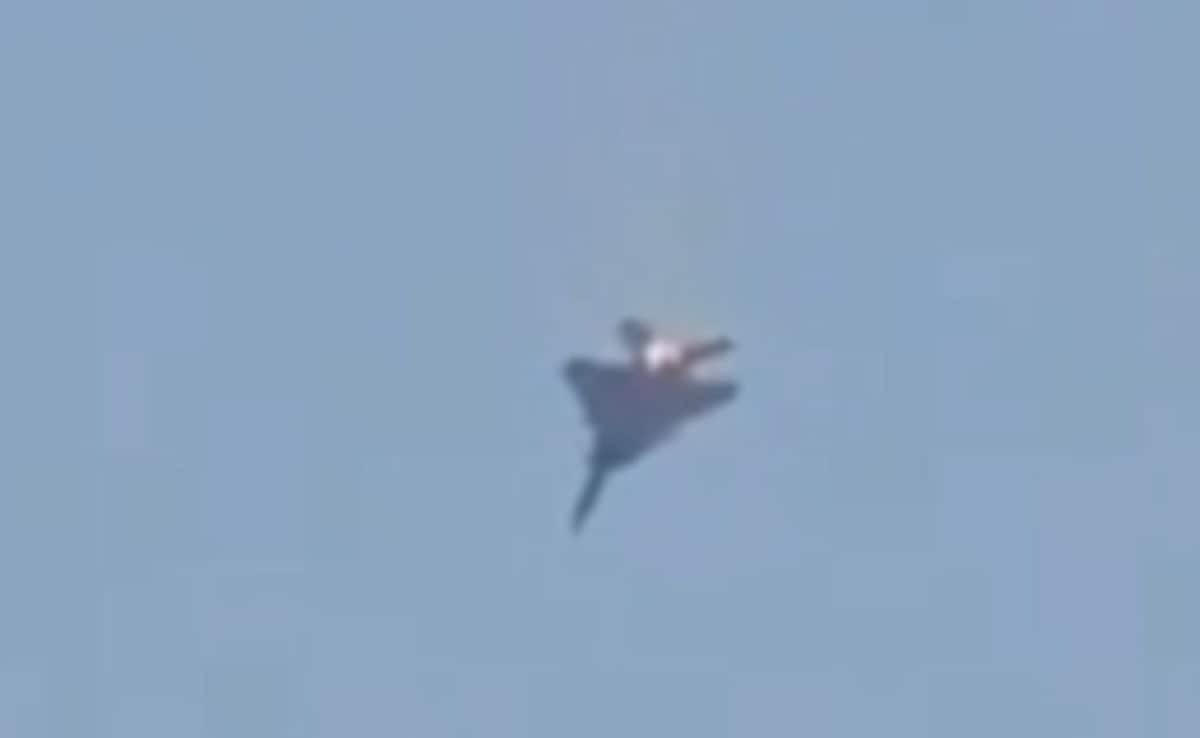
The internet is currently obsessed with a grainy video of a Kuwaiti F-15 spiraling into the desert. Iran is megaphone-shouting it across social media. The "lazy consensus" is that this is a win for regional adversaries or a catastrophic failure of American engineering.
They are wrong. They aren't just wrong about the mechanics of the crash; they are wrong about why the video even exists.
In the world of high-stakes defense, a crash isn't just a loss of hardware. It’s a data harvest. When you see "F-15 crash in Kuwait" trending, you aren't watching news. You are watching a masterclass in psychological warfare and open-source intelligence (OSINT) manipulation that most analysts are too slow to catch.
The Myth of the Unsinkable Airframe
Stop pretending that a single crash matters to the airworthiness of the F-15 platform. The F-15 Eagle has an air-to-air combat record of 104 kills and zero losses. It is the most successful fighter in history. One airframe spinning into the dirt in a non-combat training exercise tells us exactly nothing about the jet's viability.
When an aircraft goes down during a training mission, it's usually one of three things:
- Pilot Spatial Disorientation: The "Leaning" effect where the inner ear betrays the eyes.
- Bird Strikes: Nature's low-tech kinetic weapon.
- Maintenance Fatigue: The reality of running 40-year-old platforms at high temperatures.
The "experts" on Twitter are currently dissecting the spiral as if it’s a design flaw. It isn't. It’s physics. If you lose an engine or a control surface at a specific angle of attack, the aircraft enters a flat spin. We’ve known this since the 1970s. The obsession with the visual of the crash is a distraction from the data of the crash.
Why Iran Shared the Video
Iran didn't share that video because they think the F-15 is weak. They shared it because they know you are.
By amplifying footage of a "Western" asset failing, they trigger a specific cognitive bias called Availability Heuristic. You see one F-15 crash, and your brain tells you the entire Kuwaiti Air Force is grounded. It’s a cheap, effective way to erode the perceived dominance of the Gulf Cooperation Council (GCC) air power without firing a single missile.
But there is a darker layer.
I’ve spent years looking at how state actors use "accidental" footage to calibrate their own sensors. By comparing the visual descent of that F-15 with known performance metrics, an adversary can reverse-engineer the exact atmospheric conditions and response times of Kuwaiti Search and Rescue (SAR).
They aren't mocking the pilot. They are timing the response.
Stop Asking if the Pilot is Okay
People always ask: "Was the pilot at fault?" or "Was it a mechanical failure?"
These are the wrong questions. You should be asking: Who filmed it and why was it leaked?
In a strictly controlled military environment like a Kuwaiti airbase or training range, high-definition footage of a crash doesn't just "leak." It is curated. The fact that this footage reached Iranian media channels so quickly suggests a massive breach in operational security (OPSEC) that is far more dangerous than a lost F-15.
If a soldier on the ground can film a crash and upload it to Telegram, they can also film:
- Pre-flight checks.
- Munition loading sequences.
- Sensor pod configurations.
- Flight schedules.
The "broken jet" is a $30 million loss. The "broken OPSEC" is a systemic threat that could cost billions.
The Physics of the Flat Spin
Let’s get technical for a second. Most people see a "spiral" and assume a loss of power. That’s rarely the case. In a high-performance twin-engine jet like the F-15, a flat spin is often the result of Asymmetric Thrust.
Imagine a scenario where one Pratt & Whitney F100 engine stalls while the other is at full afterburner. The resulting yaw moment is enough to whip the aircraft into a rotation that the flight control computers can't always compensate for if the altitude is too low.
$$\tau = r \times F$$
Where $\tau$ is the torque, $r$ is the distance from the center of gravity, and $F$ is the thrust force. When $F$ becomes zero on one side, the aircraft becomes a giant, expensive frisbee. No amount of "advanced technology" can override the laws of motion once the aerodynamic surfaces are stalled.
The "scandal" isn't that it happened; it's that we expect it not to happen. We have become so used to the idea of "smart" planes that we forget they are still subject to the brutal reality of fluid dynamics.
The Danger of "Combat Porn"
The proliferation of this footage creates a feedback loop of misinformation. We saw it in Ukraine, we see it in the Middle East, and now we see it in Kuwait.
- The Amateur Analyst: Sees a video, identifies a "flaw," and spreads it.
- The State Actor: Takes that "flaw" and turns it into a propaganda narrative.
- The Public: Loses faith in the defense infrastructure because of a 15-second clip.
This is Grey Zone Warfare. It’s the use of non-kinetic means to achieve a kinetic result—in this case, the demoralization of an allied force. By treating these videos as "news," we are participating in the adversary’s campaign.
The Hard Truth About Maintenance
If you want to find the real villain in the Kuwait crash, don't look at the pilot or the manufacturer. Look at the supply chain.
Kuwait operates a mix of older F-15SA and newer variants. The Middle Eastern environment is brutal. Sand is an abrasive that eats turbine blades for breakfast. Heat expands seals. If you aren't spending 20 hours on maintenance for every one hour of flight time, your jets will fall out of the sky.
I have seen air forces try to cut corners on the "boring" stuff—gaskets, hydraulic fluid, sensor calibration—to save money for "glamorous" stuff like new missiles. The result is always a grainy video of a jet spiraling into the sand.
Stop Falling for the Narrative
The next time you see a "shocking" video of a military asset failing, do the following:
- Mute the audio. The commentary is designed to lead your emotions.
- Look at the source. If it’s coming from a state-affiliated channel of a rival nation, the video is a weapon, not a report.
- Check the flight envelope. Was the plane doing something it shouldn't have been doing at that altitude?
- Ignore the "disaster" and look for the "data." The F-15 is fine. The Kuwaiti Air Force will buy another one. The real casualty here isn't a piece of titanium and aluminum; it’s the ability of the public to distinguish between a routine training accident and a shift in geopolitical power.
Iran didn't shoot down an F-15. They just recorded gravity doing its job and convinced you it was a victory.
Stop being a secondary sensor for the enemy. Throw away the "lazy consensus" and start looking at the mechanics of the deception. The jet hit the ground. Don't let your common sense hit it too.