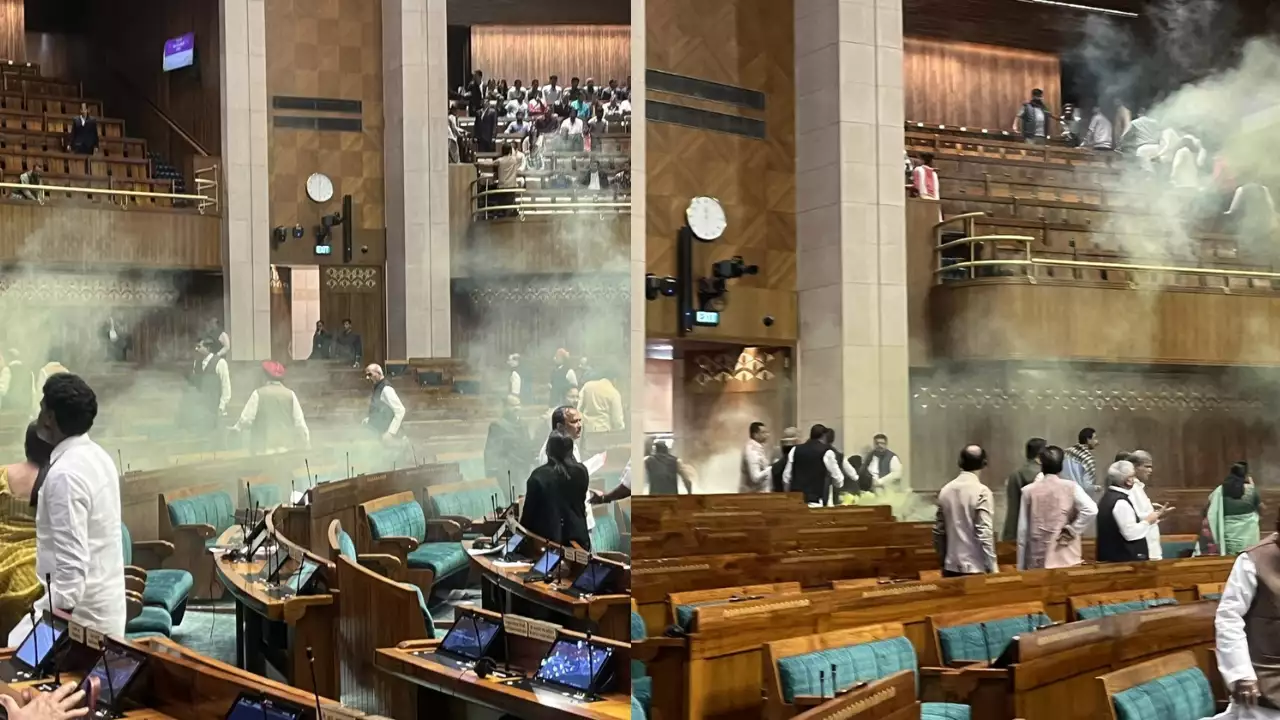
The intersection of escalating political violence and federal fiscal paralysis has created a systemic vulnerability in the United States national security infrastructure. On April 25, 2026, the assassination attempt at the Washington Hilton exposed a critical divergence between the operational requirements of the Department of Homeland Security (DHS) and the legislative constraints imposed by a 44-day partial government shutdown. This failure is not merely a political impasse; it is a breakdown of the Protection-Resource Correlation, where the surge in threat levels has met a depleted capacity for response.
The Dual-Track Funding Framework: Analysis of the Johnson-Thune Pivot
Speaker Mike Johnson’s shift from rejecting the Senate’s compromise to a "two-track" funding strategy on April 1, 2026, represents a tactical adaptation to the Institutional Risk Multiplier. By decoupling non-controversial agency functions from high-friction immigration enforcement, the House leadership is attempting to mitigate the operational degradation of the Transportation Security Administration (TSA) and the Coast Guard while preserving leverage on border policy.
The "Two-Track" mechanism operates as follows:
- The Continuity Track: Passing immediate appropriations for the "non-controversial" components of DHS—specifically FEMA, the TSA, and the Coast Guard—to address the public-facing bottlenecks at ports of entry and airports.
- The Reconciliation Track: Utilizing the budget reconciliation process to fund Immigration and Customs Enforcement (ICE) and Customs and Border Protection (CBP). This pathway bypasses the 60-vote filibuster threshold in the Senate, allowing a simple majority to secure funding for the next three fiscal years.
This approach acknowledges the Elasticity of Political Capital. Following the April 25 attack, the cost of a total DHS shutdown became politically unsustainable, as the public perceives a direct link between unfunded security personnel and increased physical risk to government officials.
Measuring Operational Degradation: The Cost of the 44-Day Shutdown
The prolonged funding lapse has generated measurable friction across the homeland security apparatus. This is not a theoretical decline but a quantifiable erosion of capability.
Personnel Attrition and Service Latency
As of late March 2026, the TSA reported the loss of approximately 450 agents who transitioned to the private sector or alternate federal roles due to the pay freeze. The resulting labor shortage created a Service Latency Loop:
- Reduced Throughput: Fewer agents at checkpoints lead to increased wait times at Category X airports.
- Security Dilution: To maintain passenger flow, pressure increases on existing staff to expedite screenings, potentially increasing the risk of "miss" events.
- Back-Pay Liability: While federal workers are guaranteed back-pay, the immediate liquidity crisis for personnel (many of whom are GS-5 to GS-9 pay grades) triggers a permanent loss of institutional knowledge that cannot be "repaid" post-shutdown.
The Secret Service Capacity Gap
The Secret Service, housed within DHS, operates on a Fixed-Asset Variable-Demand model. While their budget has seen marginal increases since the 2024 Butler, Pennsylvania incident, the actual number of field agents has trended downward, falling from 7,811 in 2021 to approximately 7,600. The April 2026 attempt confirms that the agency's "fail-safe" protocols are compromised by the current funding uncertainty.
The Security-Reform Paradox
The legislative deadlock is driven by a fundamental disagreement over the Operational Mandate of ICE and CBP. House Republicans view these agencies as essential enforcement tools, while Democratic leadership has tied funding to a list of "Mandatory Reforms."
The core points of friction include:
- Identification Standards: Democratic demands for federal agents to remain unmasked and clearly identified during operations.
- Sensitive Zone Restrictions: Prohibitions against enforcement actions near schools and hospitals.
- Judicial Oversight: Requirement for judicial warrants for administrative searches, replacing the current guidance that allows for "forcible entry" in specific immigration contexts.
This creates a Binary Stalemate. The Republican strategy of using reconciliation to fund these agencies without reforms effectively removes the Democratic leverage point, but it also creates a precedent where national security funding becomes a partisan instrument rather than a consensus-based utility.
The Strategic Path Forward
The resolution of the DHS funding crisis will likely be determined by the speed of the Reconciliation Track. However, this solution carries a significant Structural Risk: by insulating ICE and CBP from the standard appropriations process for three years, the House creates a "firewall" around immigration enforcement that may survive into the next administration.
To stabilize the national security environment, the following actions are being prioritized by the Speaker’s office:
- Immediate Passage of the Senate Compromise: Relieving the pressure on the TSA and FEMA to restore public confidence in travel and disaster response.
- Expedited Budget Resolution: Initiating the Senator Lindsey Graham-led budget resolution to lock in ICE/CBP funding before the May 22 stopgap expires.
- The SAVE Act Integration: Folding voter identification requirements (the SAVE Act) into the broader funding package to satisfy the conservative wing’s demand for "Security-Plus" legislation.
The current trajectory indicates that DHS will move toward a fragmented funding model. While this solves the immediate liquidity crisis for federal workers, it institutionalizes a rift in how homeland security is managed, moving away from a Unitary Departmental Strategy toward a bifurcated system where enforcement and service branches operate under different legislative authorities.
The immediate tactical play for the House is to force the Senate's hand on the "Continuity Track" this week, banking on the fact that no senator wants to be seen blocking FEMA or TSA funds in a high-threat environment.