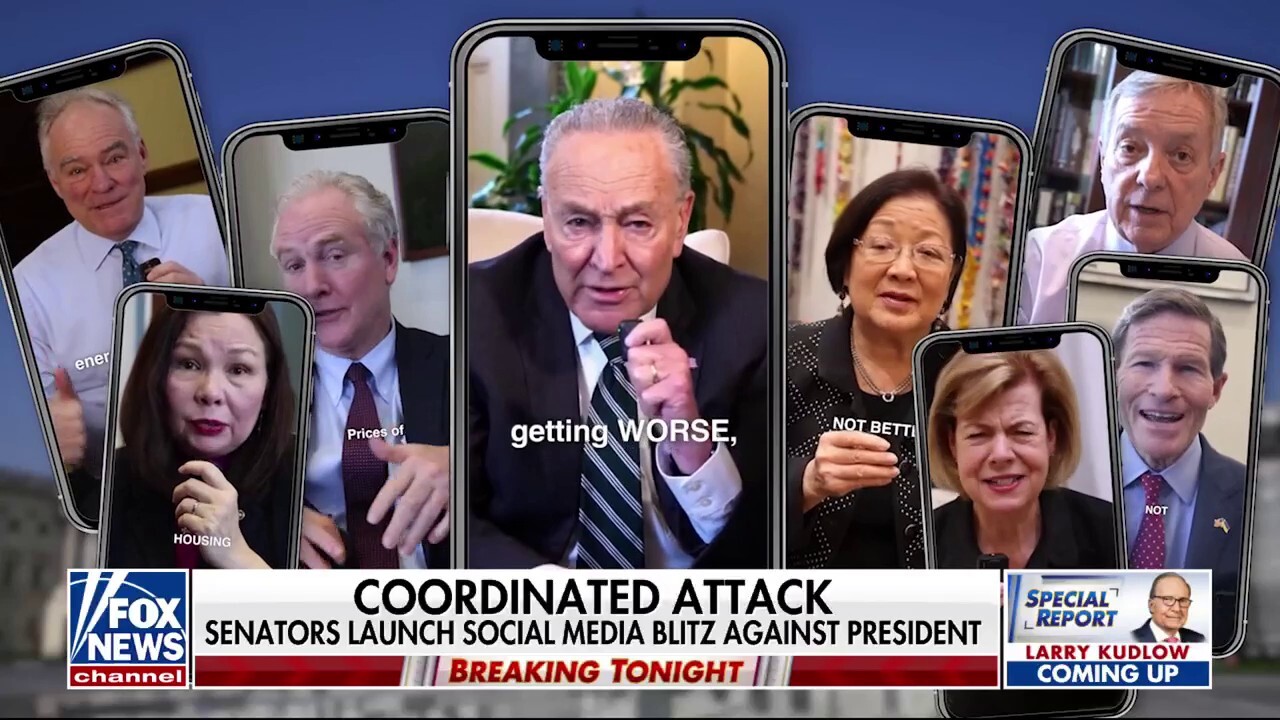
The independence of the Federal Reserve is currently facing its most significant pressure test in decades. Democratic lawmakers are signaling that the possibility of a reopened investigation into Fed operations is not just a theoretical risk but a looming strategy that could be triggered at any moment. At the center of this storm is Jeanine Pirro, whose potential influence over the Department of Justice or an oversight role has sent ripples of anxiety through the marble halls of the Eccles Building. This is not merely a debate about bureaucratic oversight. It is a fundamental struggle over who controls the levers of the American economy and whether those levers can be pulled for partisan retribution.
The current alarm stems from a series of warnings issued by senior Democratic senators who argue that the groundwork is being laid to strip the Federal Reserve of its historical autonomy. For over half a century, the Fed has operated on the principle that monetary policy should be insulated from the short-term whims of election cycles. However, the rhetoric coming from the current political opposition suggests a shift toward a model where the central bank is treated as just another agency subject to executive branch pressure. Recently making headlines in this space: The State Dinner Illusion and Why the Special Relationship is a Ghost.
The Mechanism of Pressure
To understand how a probe could be reopened, one must look at the specific legal avenues available to a determined administration. The Department of Justice maintains broad latitude to investigate financial irregularities, but when those investigations target the central bank, the implications go far beyond simple law enforcement.
Democratic senators point to the fact that past inquiries into Fed leakages or internal decision-making processes were closed without charges. Reopening these cases would require a claim of "new evidence" or a different legal interpretation of existing facts. In a highly polarized environment, the definition of what constitutes evidence can become dangerously fluid. Additional insights into this topic are covered by Al Jazeera.
The risk is not necessarily that a probe leads to a conviction. The process is the punishment. A continuous, high-profile investigation into the Fed's Board of Governors creates a cloud of uncertainty. This uncertainty translates directly into market volatility. If investors believe the Fed is making interest rate decisions based on the threat of a subpoena rather than economic data, the "inflation risk premium" begins to climb. This means higher borrowing costs for every American, regardless of their political leanings.
The Pirro Factor and the Justice Department
Jeanine Pirro represents a specific brand of legal philosophy that prioritizes aggressive, public-facing prosecution of perceived institutional failures. To her supporters, she is a truth-teller willing to take on "the deep state." To her detractors, she is a partisan actor who would use the machinery of the law to settle political scores.
If she were to hold a position of authority within the DOJ or a key advisory role, the barrier to initiating an inquiry into the Fed drops significantly. The language used by senators in recent briefings suggests they view her potential involvement as a signal that "lawfare" is coming to the financial sector.
"When you turn the DOJ into a tool for checking the Fed's homework every Monday morning, you don't get better policy. You get a paralyzed economy."
This quote, echoed in various forms across the Senate Banking Committee, highlights the fear that the Fed will become "gun-shy." If every internal memo about a rate hike could be scrutinized by a hostile prosecutor, officials might avoid making the difficult, necessary choices required to curb inflation or prevent a recession.
Historical Precedents of Presidential Interference
The United States has seen this movie before, and it rarely ends well for the taxpayer. In the early 1970s, President Richard Nixon famously pressured then-Fed Chair Arthur Burns to keep interest rates low ahead of the 1972 election. Burns complied, and the result was the "Great Inflation" that crippled the U.S. economy for a decade.
The current warnings from the Senate are an attempt to prevent a 21st-century version of the Nixon-Burns era. The difference now is the speed of information. In 1972, the impact of a pressured Fed took years to fully manifest. In 2026, the bond market reacts in milliseconds. A single tweet or a "leaked" DOJ memo regarding an investigation into the Fed's trading desk can wipe out billions in market capitalization before the opening bell even rings.
The Overlooked Threat to the Dual Mandate
The Federal Reserve operates under a "dual mandate" assigned by Congress: promote maximum employment and maintain stable prices. Critics of the proposed oversight suggest that a reopened probe would effectively add a third, unofficial mandate: political survival.
If the Fed is forced to defend its internal deliberations in a courtroom or before a grand jury, the focus shifts from data-driven analysis to legal defense. Consider the technical complexity of the Fed’s balance sheet. Explaining the nuances of "quantitative tightening" to a lay jury is a nightmare for economists. If prosecutors frame these technical maneuvers as "market manipulation" or "favoritism toward big banks," the Fed's public credibility—its most valuable asset—disintegrates.
How the Senate Intends to Fight Back
Senate Democrats are not just issuing press releases; they are looking for legislative firewalls. There is talk of strengthening the "for cause" removal protections for Fed governors, making it nearly impossible for a president to fire them simply over a policy disagreement.
However, these legislative fixes are difficult to pass in a divided Congress. The more immediate strategy is public exposure. By naming Jeanine Pirro and highlighting the specific threat of a reopened probe, senators are trying to increase the political cost of such a move. They want to ensure that if the DOJ does move against the Fed, it is seen by the public as a radical departure from American norms rather than a routine oversight measure.
The Global Consequences of a Domestic Probe
The U.S. Dollar remains the world’s reserve currency largely because the Federal Reserve is seen as a predictable, independent actor. Central banks around the world mirror the Fed’s moves. If the Fed becomes a political football, the "exorbitant privilege" of the dollar is at risk.
Foreign investors hold trillions in U.S. Treasuries. Their confidence is rooted in the belief that the Fed will always prioritize the stability of the dollar over the political needs of the White House. A DOJ probe led by a figure like Pirro would be viewed internationally as a sign that the U.S. is moving toward the "politicized central bank" model seen in emerging markets. When central banks lose independence, capital flight usually follows.
The Counter-Argument for Accountability
It is worth noting the perspective of those who support more aggressive oversight. Proponents argue that the Fed has operated in a "black box" for too long. They point to the 2021 ethics scandal involving stock trades by regional Fed presidents as evidence that the institution cannot be trusted to police itself.
From this viewpoint, a probe isn't about politics—it's about basic accountability. They argue that if the Fed has nothing to hide, it should welcome the transparency. However, there is a vast difference between an independent Inspector General’s audit and a DOJ investigation spearheaded by a political firebrand. The former is a scalpel; the latter is a sledgehammer.
The Fed's Internal Response
Inside the Fed, the mood is one of stoic preparation. Sources close to the Board suggest that legal teams are already reviewing decades-old protocols for responding to congressional and executive inquiries. They are tightening internal communications and ensuring that every decision is backed by a mountain of documented economic data.
But documentation only goes so far when the objective of an investigation is to create a narrative of corruption. The Fed’s biggest challenge isn't proving they followed the law; it's communicating their value to a public that is increasingly skeptical of all institutions. If the Fed cannot explain why its independence matters to the average person’s grocery bill, it will lose the PR war before the first subpoena is served.
Market Implications of an Ongoing Threat
We are already seeing the "Pirro Discount" in certain corners of the financial markets. Sophisticated traders are hedging against a scenario where the Fed is forced to abandon its "higher for longer" stance on interest rates due to political pressure.
- Bond Market Volatility: Increased uncertainty leads to higher yields as investors demand a premium for the risk of political interference.
- Currency Fluctuations: The dollar may weaken against the Euro or Yen if the Fed's credibility is undermined.
- Bank Stability: If the Fed's supervisory role is challenged by the DOJ, the regulatory environment for major banks becomes a legal minefield.
These are not abstract concerns for Wall Street. They are real-world costs that filter down to mortgage rates and credit card interest.
The Strategy of Permanent Investigation
The ultimate goal of reopening these probes may not be a trial, but a state of permanent investigation. By keeping the Fed in a constant state of legal defense, an administration can effectively neuter its independence without ever having to pass a single law in Congress. This "oversight by exhaustion" is a potent tool in the modern political arsenal.
The Fed chair’s time is a finite resource. Every hour spent preparing for a deposition is an hour not spent analyzing global economic shifts or fine-tuning the money supply. This is the "why" behind the Democratic senators' warning. They recognize that the mere threat of a probe is enough to change the Fed's behavior.
The institutional integrity of the Federal Reserve is perhaps the last remaining pillar of the post-WWII economic order that hasn't been fully engulfed by the flames of the culture war. If the Department of Justice is used to bridge that gap, the very definition of "independent monetary policy" will be erased. The warning from the Senate is clear: the probe is the weapon, and the trigger is being greased.
Protecting the central bank from becoming a subsidiary of the executive branch is not about defending bankers. It is about defending the only mechanism the United States has to manage the economy without the distorting influence of the next election cycle. If that barrier falls, we are entering an era of economic policy dictated by the loudest voice in the room rather than the strongest data in the spreadsheet.



