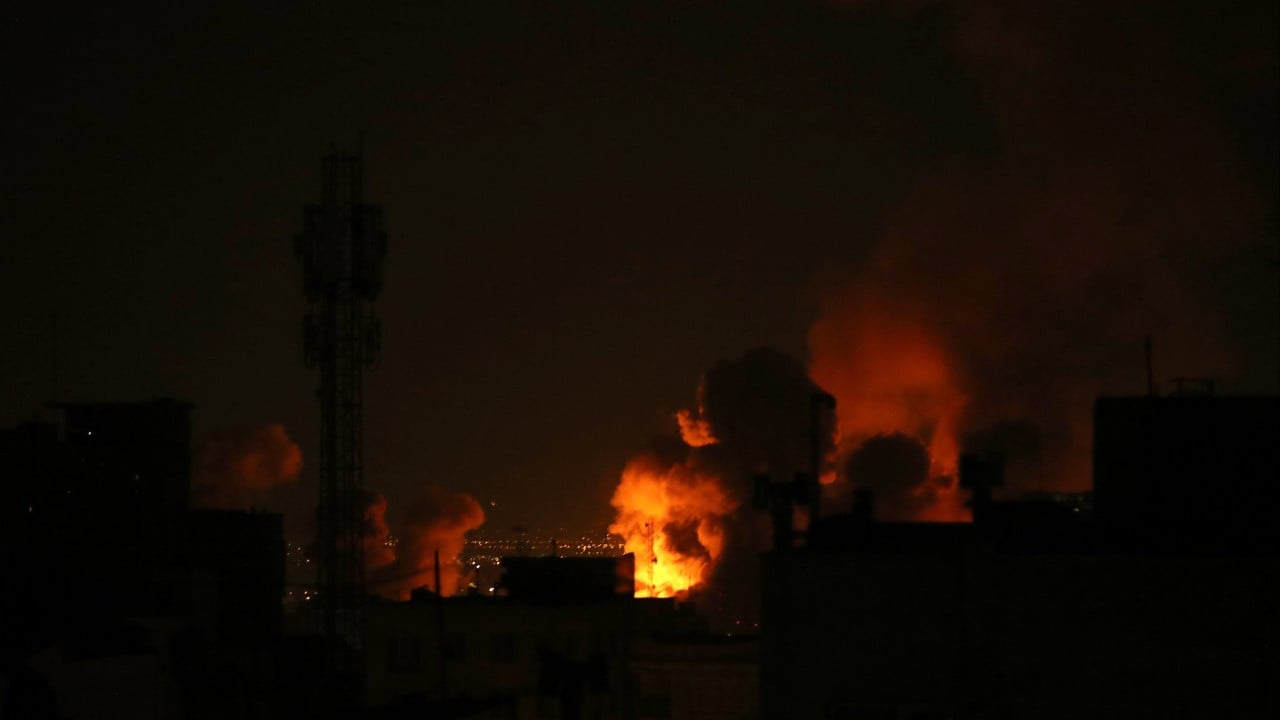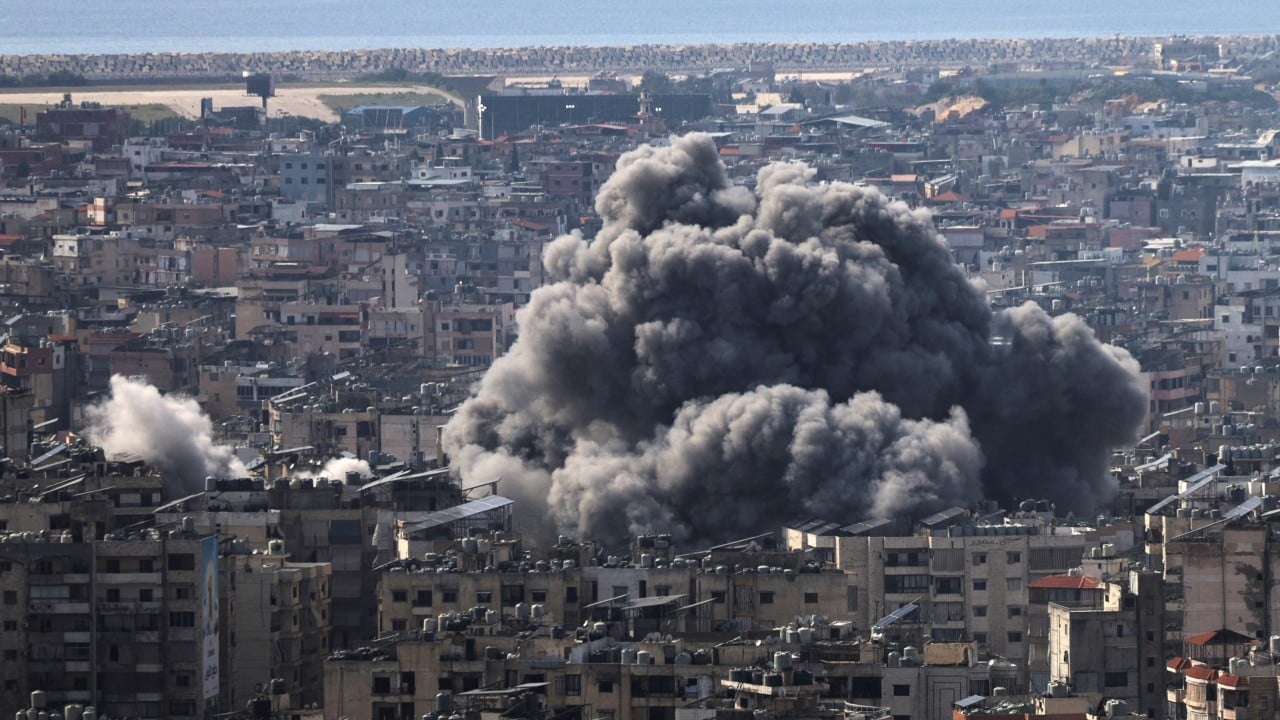
The displacement of nearly one million people in Lebanon is not a byproduct of war. It is the strategy. As Israeli airstrikes flatten residential blocks from the Bekaa Valley to the southern suburbs of Beirut, the United Nations has moved from "deep concern" to an explicit demand for legal investigations into potential war crimes. This is no longer a localized skirmish against Hezbollah. It is a systematic dismantling of the Lebanese civilian infrastructure under the guise of neutralizing missile launchers hidden in kitchens and garages.
While the international community watches the humanitarian death toll climb, the mechanics of this escalation suggest a permanent shift in how modern states wage war against non-state actors. The "Dahiya Doctrine"—the military strategy of using disproportionate force against civilian areas to deter future attacks—has been upgraded for the 2020s. We are seeing the total erasure of the distinction between military necessity and collective punishment.
The Logistics of Displacement
Wars are often measured in shell casings and casualties, but the more accurate metric in Lebanon today is the clogged artery of the northbound highways. When hundreds of thousands of people flee their homes in a single 24-hour window, the state ceases to function. Schools turn into overcrowded shelters overnight. Hospitals, already reeling from years of economic collapse, find themselves treating blast injuries with dwindling supplies of saline and gauze.
The Israeli military maintains that it provides advanced warning through SMS messages and "roof knocking" strikes. However, the legal weight of these warnings is increasingly under fire. International law is clear: a warning does not give a military carte blanche to strike a civilian target if the collateral damage remains excessive. If a family cannot find a safe route out, or if the "safe zone" they are fleeing to is also under fire, the warning becomes a psychological weapon rather than a legal protection.
Investigation teams from the UN and independent rights groups are currently documenting the use of intelligence-driven targeting that relies on AI-assisted data. The speed of these strikes suggests a reliance on automated target generation, a process that often lacks the human oversight required to distinguish a Hezbollah operative from a local shopkeeper.
The Myth of Precision
The term "precision strike" has become a rhetorical shield. In the narrow streets of Tyre and the dense neighborhoods of Beirut, a 2,000-pound bomb is never precise. Its pressure wave collapses adjacent buildings, ruptures water mains, and shatters the windows of apartments blocks away. The Israeli defense establishment argues that Hezbollah’s integration into civilian life makes this inevitable.
This argument creates a legal vacuum. If a militant group hides a rocket in a residential building, that building may technically become a legitimate target. But if that target is located in a high-rise housing fifty families, the proportionality principle under the Geneva Conventions demands that the attack be aborted. The current campaign suggests that the proportionality filter has been removed entirely.
The Hezbollah Calculus
Hezbollah is not a passive observer in this wreckage. The group’s decision to link Lebanon's fate to the conflict in Gaza has backfired on the very population it claims to protect. By maintaining a steady stream of rocket fire into northern Israel, the group provided the pretext for this massive aerial campaign.
Yet, the Israeli response has moved far beyond "silencing the launchers." The destruction of bridge networks, telecommunications hubs, and small-scale agricultural centers in the south points toward a scorched-earth policy. The goal is to make southern Lebanon uninhabitable, creating a buffer zone of rubble. This isn't just about security; it’s about demographic engineering through fire.
The Failure of International Oversight
The UN’s call for a legal probe is a desperate admission of its own irrelevance on the ground. For years, UNIFIL—the peacekeeping force in southern Lebanon—has been tasked with monitoring the border. They have watched Hezbollah build its arsenal and watched Israel violate Lebanese airspace daily. Now, they are spectators to a slaughter.
The legal framework for war is being rewritten in real-time. When a state can claim that an entire village is a "military compound," the laws of war effectively disappear. The international community’s refusal to enforce red lines has signaled to every regional power that the era of restrained warfare is over.
We must look at the weapons being used. Many of the munitions falling on Lebanese soil are supplied by Western allies who simultaneously call for a ceasefire. This hypocrisy is not lost on the Lebanese public. The "rules-based order" is viewed through the smoke of a burning apartment complex as a hollow western fantasy.
The Economic Aftermath
Lebanon was already a failed state before the first bomb fell this month. Its currency has lost 98% of its value since 2019. Its banks have frozen the life savings of its citizens. The influx of nearly a million internally displaced persons (IDPs) into Beirut and the north is the final blow to a shattered economy.
Foreign aid is a bandage on a severed limb. Most of the people fleeing have no homes to return to. The destruction of the tobacco and citrus farms in the south—the backbone of the local economy—means that even if a ceasefire is signed tomorrow, the poverty will be permanent. This displacement is a slow-motion catastrophe that will ripple across the Mediterranean, likely fueling a new wave of migration toward Europe as the middle class finally gives up on the Lebanese dream.
A New Era of Urban Warfare
The technical sophistication of these strikes is unprecedented. Israel’s use of signals intelligence to track individual cell phones and pagers has turned the entire country into a digital kill zone. This level of surveillance makes it impossible for even non-combatants to feel safe. If you once stood next to a suspected militant in a supermarket, your metadata might have already flagged you for a "signature strike."
This is the grim reality of the 21st-century battlefield:
- Total Surveillance: Every digital footprint is a potential targeting coordinate.
- Information Dominance: The aggressor controls the narrative through real-time psychological operations.
- Structural Erosion: The goal is to break the civilian will by destroying the physical world they inhabit.
The UN’s demand for an investigation will likely result in a thick report three years from now, long after the dust has settled and the borders have been redrawn. By then, the precedent will be set. The "Lebanon Model" will be the blueprint for any state dealing with a hostile neighbor: warn them, bomb them, and let the UN sort through the debris once the population has fled.
The true cost of this war is not found in the military hardware lost by Hezbollah or the iron dome interceptors spent by Israel. It is found in the permanent erosion of the idea that a civilian home is a sanctuary. Once you establish that a kitchen can be a missile silo, every kitchen becomes a target.
Monitor the movement of the heavy engineering equipment currently massing on the border. If the aerial campaign is the prologue, the ground invasion is the main event. The goal isn't just to push Hezbollah back to the Litani River; it is to ensure that there is nothing left for them to return to.
Demand an accounting of the specific intelligence used for these "residential" strikes. Ask why the "safe routes" provided to evacuees were targeted. Hold the line on the definition of a war crime before the term loses all meaning in the smoke of the Levant.