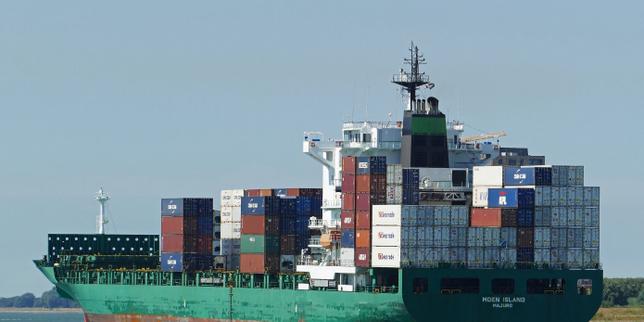
The security breach involving CMA CGM assets and the subsequent governmental response represents a friction point between private logistics giants and state-defined national interests. When a multinational entity as integrated into French economic identity as CMA CGM faces targeted disruption, the standard diplomatic reflex is to decouple the incident from national sovereignty to prevent escalation. However, this decoupling ignores the structural reality of the "State-Champion Nexus," where the boundaries between a private corporation's global operations and its home nation's strategic footprint are functionally non-existent.
The Triad of Maritime Vulnerability
The incident must be analyzed through three distinct layers of risk that define modern maritime logistics. These layers explain why a government might publicly distance itself from a corporate attack while privately treating it as a high-priority national security threat. Discover more on a similar issue: this related article.
- The Kinetic-Digital Convergence: Maritime giants are no longer just shipping companies; they are data-driven ecosystems. A physical or digital strike against a carrier like CMA CGM disrupts the "Just-in-Time" supply chains of entire continents. The governmental claim that "France was not targeted" serves as a defensive rhetorical shield, designed to deny the aggressor the satisfaction of a geopolitical "win" while maintaining the flow of global trade.
- Asset Extraterritoriality: CMA CGM operates in jurisdictions where French law has no reach, yet its vessels are seen as floating sovereign extensions. When a vessel is intercepted or a port facility is compromised, the legal ambiguity allows states to choose between claiming a violation of sovereignty or dismissing it as a private commercial dispute. The latter is a strategic choice to avoid the obligation of a military or diplomatic counter-response.
- The Economic Multiplier Effect: The French government’s reaction is calibrated by the fact that CMA CGM accounts for a significant portion of the nation's maritime trade capacity. Any admission that the state itself is under fire through its corporate proxies would trigger risk premium hikes in insurance (P&I Clubs) and credit markets, directly harming the national GDP.
Deconstructing the Official Narrative of Non-Targeting
The official statement—"It was in no way France that was targeted"—functions as a containment protocol. This narrative relies on a narrow definition of targeting that requires a direct strike on a government building or military asset. In the logic of modern gray-zone warfare, this definition is obsolete.
Targeting a strategic national interest (the flagship carrier) achieves the same psychological and economic results as targeting the state, but with the added benefit of plausible deniability for the aggressor and a "graceful exit" for the victim state. By framing the event as a localized security incident rather than an act of aggression against the Republic, the government preserves its ability to negotiate through backchannels rather than being forced into a public stance of retaliation. Additional journalism by MarketWatch delves into similar perspectives on the subject.
The Cost Function of Strategic Silence
Maintaining the "private incident" narrative carries specific operational costs and benefits that dictate how logistics firms must prepare for future escalations.
- Benefit: Escalation Management. By de-nationalizing the conflict, the government prevents a maritime incident from spiraling into a wider diplomatic crisis. This keeps the Suez and other critical chokepoints open for other French flagged vessels.
- Cost: The Security Gap. When the state refuses to acknowledge an attack as national, the burden of defense shifts entirely to the private sector. CMA CGM must then internalize the costs of private security details, cyber-defense hardening, and rerouting—expenses that eventually manifest as "War Risk Surcharges" for the end consumer.
The second limitation of this strategy is the erosion of deterrence. If an aggressor perceives that attacking a national champion will only result in a localized, private-sector response, the threshold for future attacks is lowered. This creates a "Security Paradox" where the government’s attempt to project stability actually invites further testing of its red lines.
Structural Bottlenecks in Supply Chain Sovereignty
The reaction of the executive branch highlights a deeper dependency. France, like many Western nations, has outsourced its strategic resilience to a handful of massive private players. The "bottleneck" here is not just physical—it is cognitive. The government cannot afford to have CMA CGM targeted, but it also cannot afford the political cost of defending it as an arm of the state.
This creates a dual-track reality:
- Publicly: The incident is a matter for the company’s internal security and local authorities.
- Privately: French intelligence services and naval assets are likely re-tasked to monitor the specific corridors where these assets are most vulnerable.
This disconnect is most visible in the "Images of Response" broadcast by the government. These visual cues are intended to show competence without declaring a casus belli. They focus on technical recovery and local coordination rather than the mobilization of national defense assets.
The Mechanism of Modern Maritime Sabotage
To understand why the government's "not targeted" stance is technically fragile, one must look at the selection criteria for such actions. Aggressors select targets based on "Maximum Systemic Friction."
$$Friction = \frac{Economic Impact \times Symbolic Value}{Ease of Attribution}$$
CMA CGM ranks high in both the numerator and the denominator. It is a symbol of French global reach, its disruption causes immediate economic ripples, and because it operates in international waters or foreign ports, attributing an attack to a specific state actor remains difficult enough to prevent a formal declaration of war.
Strategic Shift: Internalizing National Defense
For corporations of this magnitude, the takeaway is clear: the state will provide rhetorical support and backchannel mediation, but the operational defense of the asset is a corporate liability.
The move toward "Corporate Sovereignty" is the only logical path forward. This involves:
- Hardening "Soft" Power: Developing internal intelligence capabilities that rival small-state agencies to anticipate geopolitical shifts before they manifest as physical threats.
- Diversification of Flagging: While maintaining its French identity, the company must continue to balance its fleet registration to utilize the legal protections of various jurisdictions, making it harder for an adversary to claim they are hitting a specific nation.
- Independent Deterrence: Investing in cyber-retaliation and physical security protocols that operate independently of the home-state’s military schedule.
The government’s insistence that the nation was not the target is a tactical lie designed to preserve the status quo. For the logistics sector, the reality is that the corporation is the battlefield. Future security strategies must be built on the assumption that being a national champion is a liability that requires a private-sector solution, as the state's primary interest is the management of the narrative, not necessarily the protection of the individual vessel.