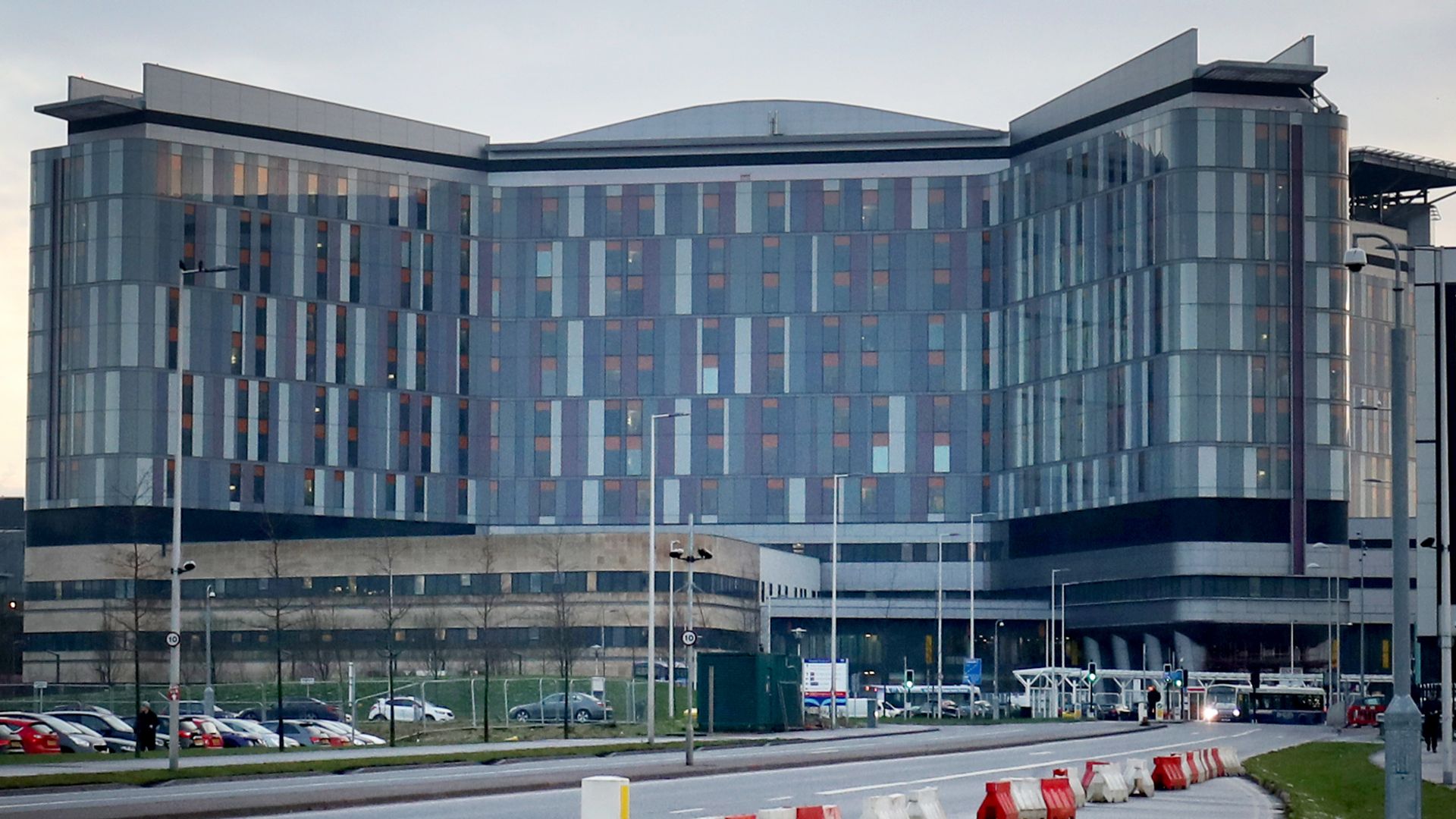
The headlines are predictable. They are dripping with the kind of manufactured outrage that sells newspapers but kills patients. "Scandal-hit hospital closes ward due to mould." "Water ingress sparks fresh fears." To the average reader, it sounds like a house of horrors. To anyone who has actually managed a clinical environment under pressure, it sounds like a massive, bureaucratic surrender that prioritizes optics over oncology.
We have reached a point where "safety culture" has become a suicide pact. By closing a cancer ward because of damp or spores, administrators aren't protecting patients. They are shifting the risk from a visible, media-friendly problem (mould) to an invisible, lethal one (delayed treatment).
I have seen hospital boards spend $500,000 on "remediation" while their oncology waitlist grows by 15%. I have watched facilities managers panic over a patch of Aspergillus in a hallway while ignoring the fact that a three-week delay in radiotherapy for a Stage III patient reduces their five-year survival rate by a measurable, brutal percentage.
The Infection Control Fallacy
The "lazy consensus" says that any presence of mould in a hospital is an absolute failure. It’s treated as a binary: either the building is sterile, or it’s a death trap. This is a lie. Hospitals are porous, aging, and constantly under siege by biology.
The standard argument is that immunocompromised patients cannot be near fungal spores. Correct. But let’s look at the actual math of risk.
- The Fungal Risk: The incidence of invasive aspergillosis in high-risk patients is serious, but it is a manageable clinical variable. We have HEPA filtration, prophylactic antifungals like Voriconazole, and localized containment.
- The Delay Risk: Cancer does not pause for a construction crew. When you close a ward, you trigger a domino effect. Referrals are pushed back. Surgeries are rescheduled. The "system" absorbs the slack, but the patient's tumor continues to double.
By choosing to shut down instead of isolate and treat, the hospital is choosing a "clean" record over a living patient. They are terrified of a lawsuit related to an infection, so they accept the "natural" death of a patient whose cancer progressed because their ward was shuttered. One is a PR nightmare; the other is just a statistic.
The Infrastructure Debt Nobody Wants to Pay
The media loves to blame "scandal-hit" management, but that's a cheap shot that misses the structural rot. We are trying to run 21st-century precision medicine inside 19th-century Victorian brickwork or 20th-century concrete failures.
Water ingress isn't a "scandal." It is the inevitable result of decades of deferred maintenance. In the UK and parts of the US, the "maintenance backlog" is a figure so large it has lost all meaning. When you underfund the physical plant for thirty years, the roof leaks.
The real scandal isn't the mould; it’s the fact that we treat hospital facilities as an overhead cost to be minimized rather than a critical medical instrument. A surgeon wouldn’t use a rusted scalpel, yet we expect them to operate in buildings where the HVAC systems are held together by duct tape and prayers.
Stop Fixing Symptoms and Start Building Redundancy
The standard response to these closures is a "deep clean" and a press release. It’s theater. It’s the equivalent of putting a Band-Aid on a sucking chest wound.
If we actually cared about cancer outcomes, we would stop the cycle of panic-and-patch. Here is the uncomfortable reality:
- Modular Redundancy is Mandatory: Every major oncology center should have a "hot-swap" facility—pre-certified modular wards that can be activated in 48 hours. If Ward A has a leak, you move the patients to the modular wing. You don't send them home to wait for their death certificates.
- Clinical Risk vs. Facility Risk: We need to empower Chief Medical Officers to override Facility Managers. If the CMO determines that the risk of treatment delay exceeds the risk of environmental exposure, the ward stays open with enhanced bedside filtration.
- The End of the "Mega-Hospital": We keep building these massive, centralized monoliths. When one pipe bursts, the whole system collapses. We need decentralized, specialized clinics that are easier to maintain and impossible to shut down all at once.
The Brutal Truth About "Patient Safety"
Ask any oncologist what keeps them up at night. It isn't a patch of black mould in the staff breakroom. It’s the patient who was supposed to start chemo on Monday but got a call saying the ward is closed for "environmental reasons."
That patient is now at the back of a queue. Their cancer is aggressive. It doesn't care about the hospital’s maintenance schedule. It doesn't care about the board’s fear of a negative headline in the local paper.
We have created a system where it is legally and professionally safer for a hospital executive to let a patient die of cancer than to risk them catching a respiratory infection. The former is "unfortunate," while the latter is "negligence."
Your Action Plan for Survival
If you are a patient or a family member facing a closure like this, do not accept the "safety first" narrative.
- Demand the Data: Ask for the specific fungal load counts and compare them to the statistical risk of your specific treatment delay.
- Force the Transfer: Do not "wait for the ward to reopen." Demand a transfer to a private facility or a neighboring trust immediately. The hospital’s facility failure is their liability, not your burden to bear.
- Ignore the Optics: The hospital will look "clean" on the news next week when they announce the reopening. That won't matter if your tumor has metastasized in the interim.
The obsession with "pristine" environments at the expense of continuous care is a form of medical malpractice. We are sanitizing our hospitals while our patients wither on the waiting list. It’s time to stop fearing the spores and start fearing the clock.
If the roof is leaking, get an umbrella and keep the infusion lines running. Anything else is just a slow-motion execution masked as "care."