The sea does not care about borders. It only cares about flow. But in the narrow, turquoise neck of the Persian Gulf, the flow has stopped.
Imagine a single artery in a human body. Now imagine a tourniquet twisting tight around it. The limb begins to throb. The heart races to compensate. This is the Strait of Hormuz today. It is a strip of water only twenty-one miles wide at its narrowest point, yet it carries the literal lifeblood of the global economy. One-fifth of the world’s daily oil consumption passes through this gap.
When Iran announced it was shutting the Strait, the world didn’t just listen. It flinched. The threat wasn't just a diplomatic cold shoulder; it was a vow to burn any vessel that dared to challenge the blockade.
The Weight of a Single Barrel
To understand the chaos, you have to look past the maps and the naval destroyers. You have to look at a kitchen table in Mumbai, a gas station in Ohio, or a logistics hub in Frankfurt.
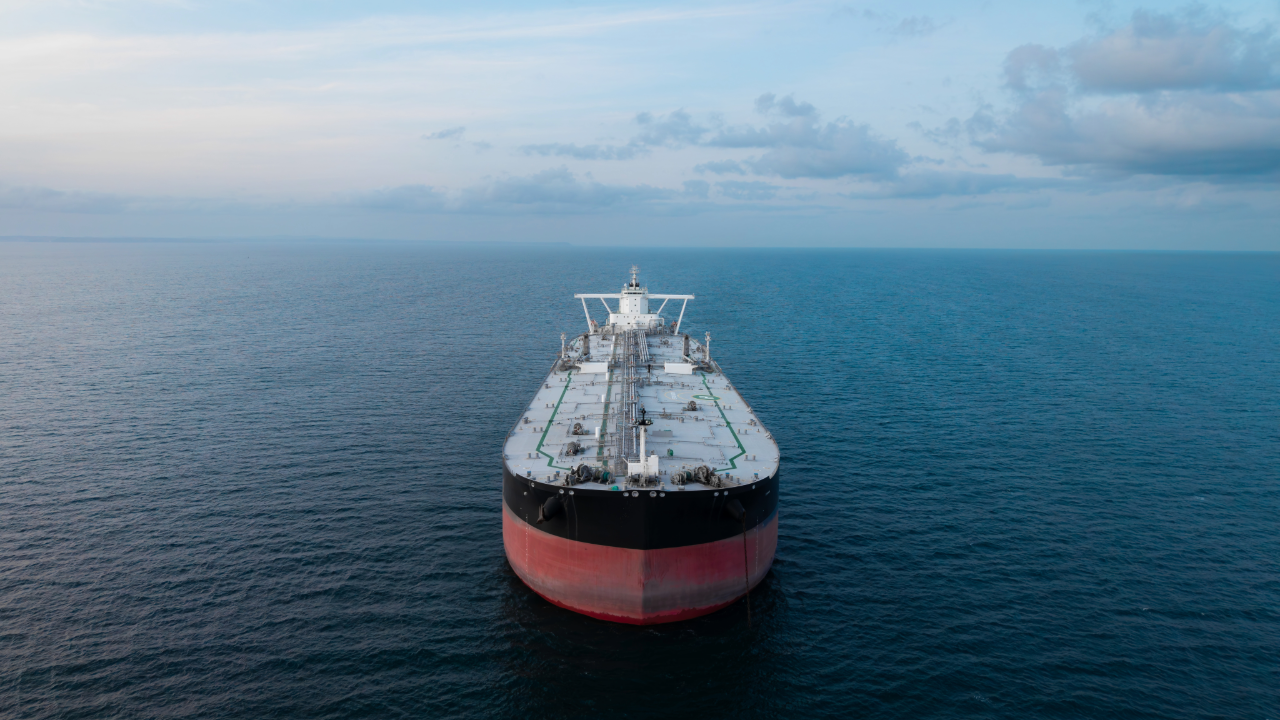
Take a hypothetical merchant sailor named Elias. He is forty-eight, has a daughter starting university in three months, and is currently standing on the bridge of a Very Large Crude Carrier (VLCC). Under his feet are two million barrels of oil. To the world, he is a statistic in a maritime report. To himself, he is a man trapped in a corridor of fire.
The Strait of Hormuz is not a wide-open ocean. It is a highly regulated shipping lane. Because of the shallow waters and the presence of islands, tankers must follow a specific path. If Iran decides to "burn ships," Elias isn't just a target. He is a target with nowhere to turn.
When the news broke, the price of Brent crude didn't just climb; it leaped. This is the "fear premium." It is the cost of uncertainty. When the flow of oil is threatened, every product that requires transport—which is to say, everything—becomes more expensive. The plastic in your phone. The fertilizer for your food. The fuel for the truck delivering your medicine.
A History Written in Salt and Oil
This isn't the first time the world has held its breath here. The "Tanker War" of the 1980s saw hundreds of ships attacked. But the technology of destruction has evolved.
We aren't just talking about conventional warships anymore. We are talking about swarms of fast-attack boats, sea mines that hug the floor of the Gulf, and sophisticated anti-ship missiles tucked into the jagged cliffs of the Iranian coastline.
The geography itself is a weapon.
Most people assume the Strait is international water. In reality, it consists of the territorial waters of Iran and Oman. Under the United Nations Convention on the Law of the Sea, ships have the right of "transit passage." It is a fragile legal agreement that keeps the world’s lights on. When a nation unilaterally decides to tear up that agreement, the law of the jungle returns to the high seas.
The India Factor
India watches this more closely than perhaps any other nation. Why? Because the arithmetic of Indian energy is brutal and uncompromising.
India imports over 80% of its crude oil. A significant portion of that comes from Iraq, Saudi Arabia, and the UAE. All of those exports must pass through the Strait. There is no easy detour. There are pipelines, yes—the East-West Pipeline in Saudi Arabia and the Habshan-Fujairah pipeline in the UAE—but they cannot handle the sheer volume that the tankers carry.
For a developing economy, a spike in oil prices is a tax on the poor. It drives inflation. It devalues the currency. It turns a hopeful fiscal year into a struggle for survival.
If the ships burn, the dreams of millions of people who have never seen the Persian Gulf begin to smoke.
The Invisible Stakes of Naval Power
The response from the West and its allies has been a predictable show of force. Carriers move. Destroyers patrol. But there is a fundamental mismatch in this chess game.
A billion-dollar destroyer is designed to fight other billion-dollar destroyers. It is less prepared for a thousand-dollar drone or a mine that costs less than a used car. This is asymmetric warfare. Iran knows it cannot win a traditional naval battle against a superpower. It doesn't have to. It only has to make the passage too expensive to insure.
Lloyd’s of London and other maritime insurers are the silent arbiters of global trade. If the risk of a ship being "burned" goes from 0.01% to 10%, the insurance premiums skyrocket. Eventually, shipping companies simply refuse to go.
The blockade becomes a reality not because of a physical wall, but because of a ledger.
The Human Cost of High-Stakes Defiance
We often talk about "geopolitical tensions" as if they are weather patterns. They are not. They are choices made by men in rooms, and they are felt by men on the water.
Consider the crew of a tanker sitting idle just outside the Gulf of Oman. They are waiting for orders. They are watching the horizon for the silhouette of a patrol boat. They are checking the news on satellite internet, seeing their own location highlighted in red on global maps.
The psychological toll of being a pawn in a global energy war is immense. These are not soldiers. They are civilian workers. They are the invisible laborers of the globalized world, and suddenly, they are on the front lines of a conflict they didn't ask for.
The Fragility of the "Just-in-Time" World
We live in a world designed for efficiency, not for resilience. We have "just-in-time" supply chains that assume the roads will always be open and the seas will always be calm.
The closure of the Strait of Hormuz is a brutal reminder that our modern comfort is built on a foundation of precarious geography. We have spent decades optimizing for cost, but we have neglected to optimize for safety.
When the rhetoric turns to fire and burning ships, the veneer of civilization thins. We realize that our entire global structure depends on a few miles of water staying quiet.
The ships are still out there, bobbing in the swells, filled with the energy that powers our cities and our lives. They are waiting. The world is waiting. And in the silence of that narrow passage, the only sound is the water hitting the hull, and the ticking of a clock that no one knows how to stop.
The fire hasn't started yet, but the air is already thick with the smell of gasoline and sweat.