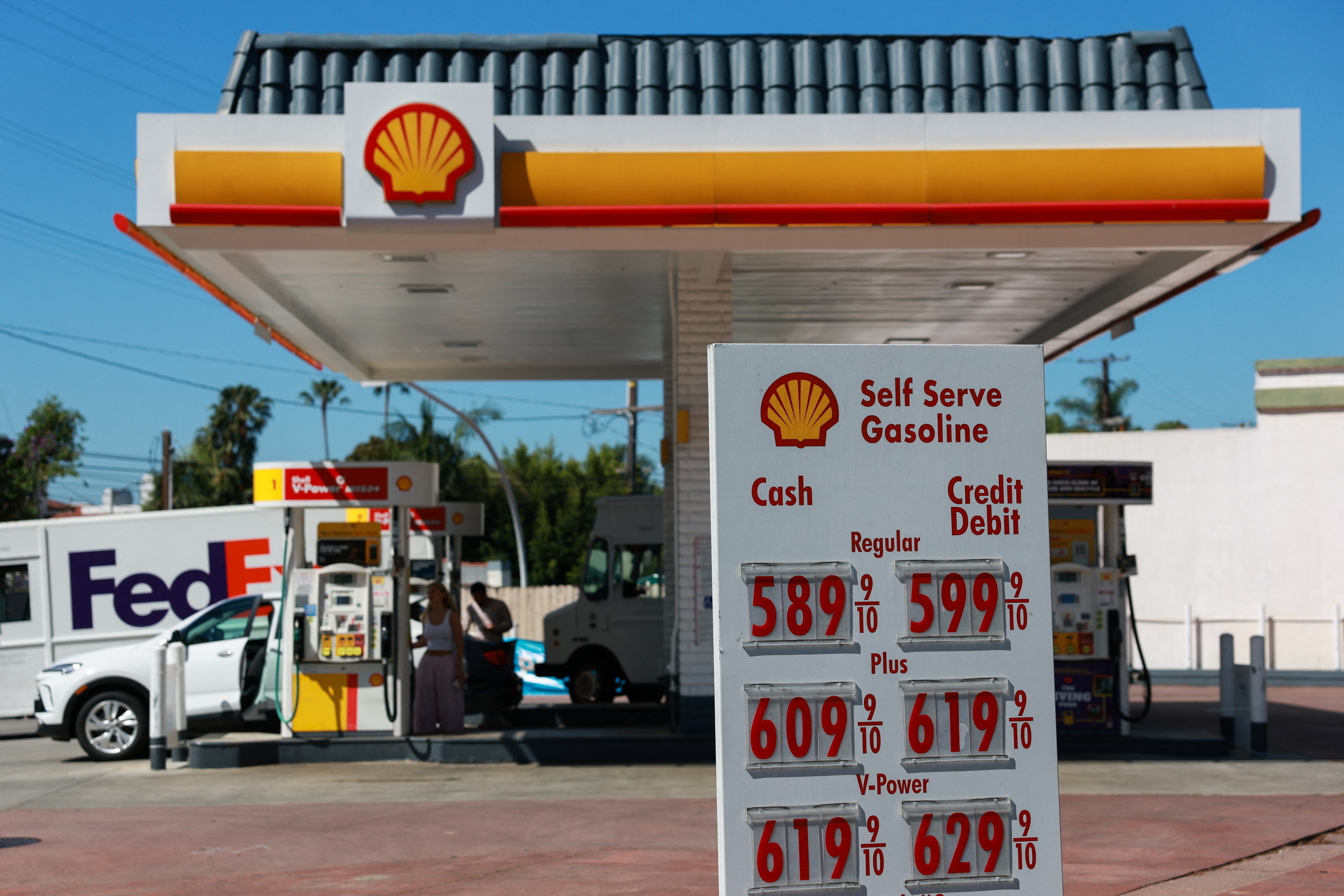
The headlines are screaming about a "victory" for the American consumer because the national average for a gallon of regular is ticking toward $3.99. Everyone from cable news anchors to suburban commuters is popping champagne over a few cents of relief. They are celebrating a disaster.
The obsession with the $4 threshold is a psychological trap. It is a round-number fallacy that blinds the public to the structural decay of the energy market. While the "lazy consensus" argues that lower prices at the pump act as an immediate stimulus for the economy, they are ignoring the reality of the boom-bust cycle that has crippled domestic energy independence for decades.
If you want a stable economy, you should be praying for $5 gas.
The Myth of the Price Drop Stimulus
The standard narrative says that when gas prices fall, consumers spend that extra cash elsewhere—retail, dining, travel. It’s a clean, linear story that economists love because it’s easy to model. It is also fundamentally flawed.
When prices drop due to a temporary glut or a seasonal dip in demand, it creates a "dead cat bounce" in consumer sentiment. People don't suddenly become wealthier; they just become more complacent. They go out and buy a larger SUV or a heavier truck, baking in a higher cost of living for the next decade. By the time the inevitable supply shock hits—whether it’s a refinery fire in Louisiana or a geopolitical flare-up in the Strait of Hormuz—the consumer is more vulnerable than they were before the "relief" started.
Low prices are a sedative. They mask the fact that our infrastructure is aging and that we haven’t built a major new refinery in the United States since the 1970s. We are operating on a razor’s edge. When prices are low, the incentive to innovate or harden that infrastructure vanishes.
Why $4 Gas Kills American Energy
I’ve sat in boardrooms where the difference between a $70 barrel of oil and an $80 barrel of oil determines whether a project gets the green light or gets buried. When the price at the pump stays low, the capital expenditure (CapEx) for domestic production dries up instantly.
Wall Street has changed the rules of the game. Gone are the days of "drill, baby, drill" where companies would burn cash to chase production volume. Today, investors demand returns. They want dividends and buybacks. If the price of oil doesn't justify the massive risk of drilling a new well, the rigs stay dark.
When you celebrate $3.80 gas, you are celebrating the dismantling of the American energy sector’s future capacity.
- Reduced Exploration: Lower prices force companies to high-grade their acreage, meaning they only drill the "sure things."
- Service Industry Collapse: The people who actually do the work—the frackers, the haulers, the engineers—get laid off.
- The Lag Effect: You can’t just flip a switch and get that production back. It takes eighteen to twenty-four months to spin up a serious drilling program.
By demanding cheap gas today, you are guaranteeing a supply shortage and a $7 spike two years from now. You are trading a slight discount this week for a catastrophic shock down the road.
The Refinery Bottleneck Nobody Wants to Discuss
The price of crude oil is only half the story. The "crack spread"—the difference between the price of crude and the price of the refined products like gasoline and diesel—is where the real pain lives.
We have a refinery problem that cheap gas makes worse. Refining is a low-margin, high-headquarters-headache business. Environmental regulations, NIMBYism, and the long-term shift toward EVs make building a new refinery a financial suicide mission. When gasoline prices stay suppressed, these aging facilities skip non-essential maintenance to keep the lights on.
Imagine a scenario where the national average stays at $3.50 for a year. The incentive for a refiner to invest $500 million in a catalytic cracker upgrade evaporates. They run the plant until it breaks. When it breaks, supply vanishes, and the price jumps $1.50 overnight. This isn't a theory; it’s the history of the American energy grid. High prices provide the margin necessary for safety and reliability. Cheap gas is a precursor to a breakdown.
The Geopolitical Cost of Your Discount
The "lazy consensus" ignores the fact that cheap gas is a gift to our adversaries. When the U.S. consumer is addicted to sub-$4 fuel, the government is forced to prioritize short-term price stability over long-term strategic interests.
We’ve seen the Strategic Petroleum Reserve (SPR) drained to historic lows to shave a few cents off the price during election cycles. That is a strategic catastrophe. The SPR is meant for war and national emergencies, not for making sure people feel better about their commute to the mall. By demanding low prices, we are effectively disarming our primary energy security tool.
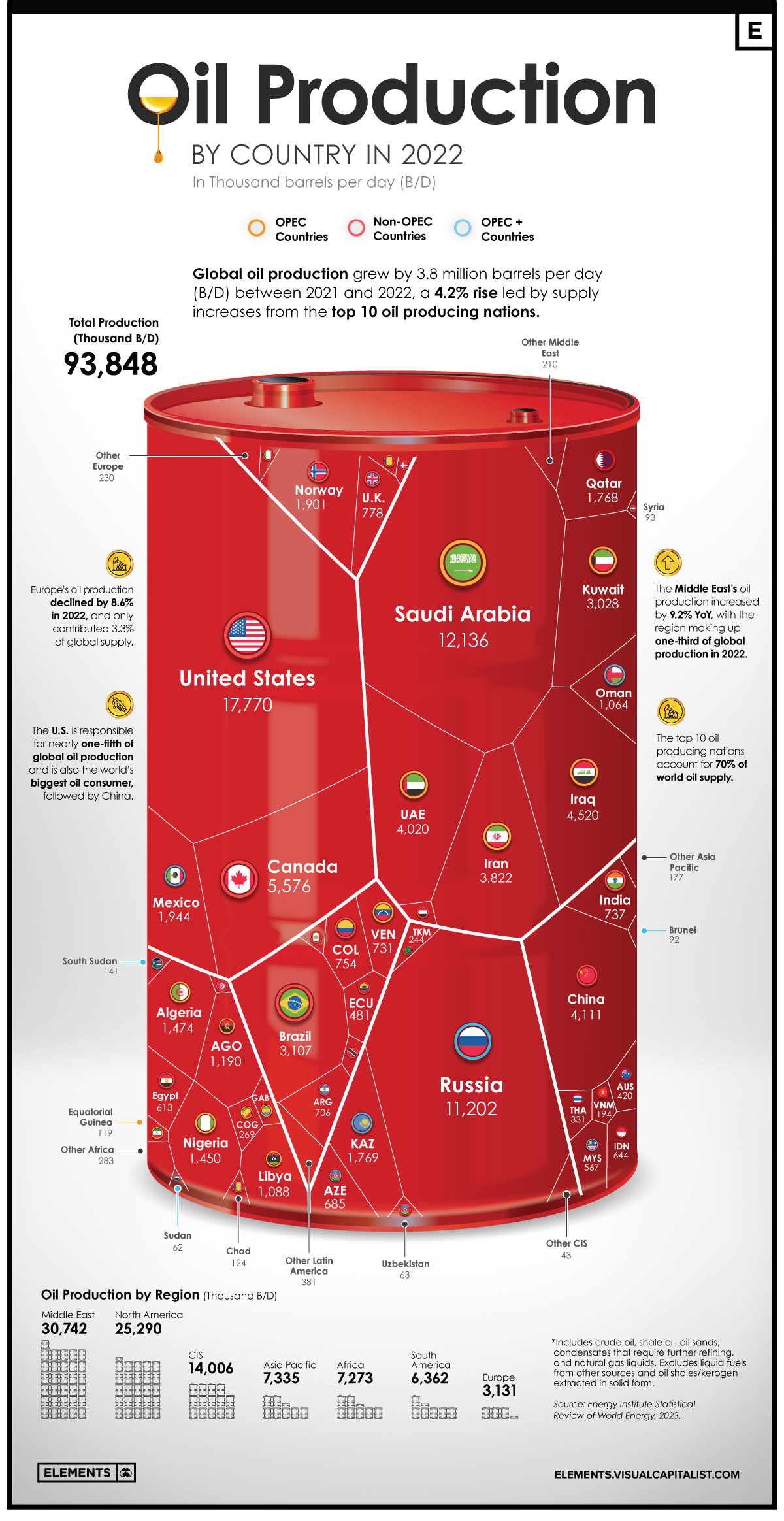
Furthermore, low prices give OPEC+ more leverage, not less. When American shale becomes unprofitable at low price points, the global market share shifts back to Riyadh and Moscow. They can afford to play the long game. They can weather low prices longer than a publicly traded company in Texas can. When they finally decide to cut production, they own us.
The Efficiency Lie
"If gas is expensive, the poor suffer most."
This is the most common argument used to defend the status quo. It is a shield used by politicians to avoid talking about real solutions. Yes, energy costs are regressive. But keeping prices artificially low via subsidies or strategic releases is a band-aid on a gunshot wound.
Expensive gas is the only thing that has ever successfully driven efficiency. In the late 2000s, when gas started its march toward $4 and beyond, the American auto industry finally started caring about miles per gallon. Logistics companies started optimizing routes. Businesses started embracing remote work.
The moment prices drop, all that progress halts. We go back to idling in drive-thrus and building sprawling developments an hour away from city centers. High gas prices are a brutal, honest teacher. They force a society to reconcile with the reality of its resource consumption.
The Math of the "Relief"
Let's do the actual math that the competitor's article missed.
If the average driver travels 14,000 miles a year in a vehicle that gets 25 miles per gallon, they consume 560 gallons of gas.
- At $4.50/gallon, they spend $2,520 a year.
- At $3.90/gallon, they spend $2,184 a year.
The "massive relief" everyone is talking about amounts to roughly $336 a year. That’s $28 a month. That is less than the cost of a single dinner out or a couple of streaming subscriptions.
Is $28 a month worth crippling our domestic energy production? Is it worth draining our strategic reserves? Is it worth disincentivizing the transition to a more resilient power grid?
The answer is a resounding no. The psychological relief of seeing a "3" at the start of the gas price sign is a high-interest loan that we will all have to pay back with interest when the next supply crunch hits.
Stop Asking When Gas Will Drop
The question "When will gas drop below $4?" is the wrong question. It’s a question asked by people who want to be lied to.
The real question is: "Why is our economy so fragile that a $0.50 fluctuation in a commodity price causes a national panic?"
The fix isn't cheaper gas. The fix is a diversified energy portfolio, a hardened refinery network, and a consumer base that isn't one tank of gas away from insolvency. But as long as we keep chasing the dragon of cheap fuel, we will never build that reality.
We are currently in a period of false calm. The global supply chains are still knotted, the transition to renewables is messy and underfunded, and the geopolitics of energy are more volatile than they’ve been in fifty years. Enjoy your $3.95 gas while it lasts, because it is the most expensive "discount" you will ever buy.
Stop looking at the pump and start looking at the structural rot. The price isn't the problem; the dependency is. And nothing feeds dependency like a temporary price cut.