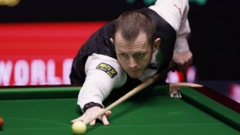
Mark Allen did not just win another snooker title; he broke the blueprint of the modern, hyper-optimized athlete to do it. While his peers spent the off-season obsessing over sports psychology, biomechanics, and rigid caloric deficits, Allen took a sharp detour into what many would call professional heresy. He leaned into the comforts of the pub, heavy meals with friends, and the escapism of football. This was not a collapse of discipline. It was a tactical reset of a weary mind that had grown brittle under the weight of expectation and technical perfection.
The "Pistol" found his aim again by looking away from the table. By the time he hoisted the trophy, it was clear that his victory was a triumph of psychological elasticity over mechanical grind.
The Psychological Trap of Professional Perfection
In the current professional sports climate, there is an almost religious devotion to the "marginal gains" philosophy. Players are told that every waking second must be an investment in their craft. For a snooker player, this usually means thousands of hours in a windowless room, repeating the same cue action until the muscle memory is ironclad. But the human brain is not a machine, and snooker, perhaps more than any other sport, is a game of mental endurance.
When a player hits a slump, the instinctual reaction is to practice harder. Allen recognized that he was reaching a point of diminishing returns. The harder he pushed, the more the game pushed back. He wasn't missing shots because of a technical flaw; he was missing because the joy of the game had been replaced by a suffocating sense of duty.
The Power of Tactical Detachment
Allen’s decision to spend time with friends, indulge in "bad" food, and immerse himself in the tribal energy of football was a form of radical detachment. By allowing himself to be "unprofessional" in his personal habits for a brief window, he removed the self-imposed pressure that had been strangling his performance.
When he returned to the table, he wasn't just rested; he was hungry. The contrast between the leisure of his time off and the intensity of the tournament created a psychological spark that a month of technical drills never could. He stopped overthinking the physics of the cue ball because he had successfully re-categorized snooker as a challenge to be met, rather than a burden to be carried.
Reframing the Athlete Diet
The narrative surrounding Allen’s "bad food" intake is often framed as a lack of discipline, but it serves a specific neurological purpose. High-level competition triggers a prolonged state of high cortisol—the stress hormone. Chronic cortisol elevation leads to mental fatigue, sleep disturbances, and a loss of fine motor control.
While a diet of grilled chicken and steamed greens is optimal for physical recovery, it often fails to provide the "dopamine hit" required to offset the grueling mental tax of a snooker season. Allen’s choice to enjoy his life outside the arena functioned as a chemical reset. By prioritizing his immediate happiness and social connection, he lowered his baseline stress levels, which in turn allowed him to remain calmer under the lights of the final.
Why Football is the Ultimate Mental Cleanser
For many athletes in individual sports, the isolation is the hardest part. You are alone with your thoughts for hours. Football, for Allen, represents the opposite of that isolation. It is loud, collective, and entirely outside of his control.
Watching football allows a professional athlete to become a fan again. It restores the perspective that sports, at their core, are about emotion and entertainment. When Allen stood in the stands or watched his team on TV, he wasn't the man responsible for the outcome. He was just a witness. This shift from "actor" to "observer" is a proven method for reducing performance anxiety. It reminds the subconscious that the world does not end if a ball doesn't go into a pocket.
The Counter-Intuitive Path to Consistency
The common misconception in sports analysis is that consistency is the result of a flat, unchanging routine. The reality is that true consistency requires peaks and valleys. If you try to stay at a 10/10 level of focus all year, you will eventually burn out and drop to a 2/10.
Allen’s "unconventional" preparation allowed him to drop to a 4/10 in effort during his downtime so that he could spike to a 9/10 when the tournament began.
The Industry Obsession with Optimization
We are currently seeing a pushback against the "grind culture" in several professional sports. Golfers, dart players, and snooker professionals are beginning to realize that the life of a monk is rarely sustainable for a career that spans decades.
- Social Connection: Spending time with "the lads" provides an emotional safety net that a sports psychologist can't replicate.
- Dietary Flexibility: Small indulgences can prevent the "rebellion" phase of a strict diet where an athlete falls off the wagon entirely.
- Active Rest: Engaging in a different sport (as a fan or amateur) maintains a competitive spirit without the specific physical toll of one's primary profession.
The Risk of the Pendulum Swing
It would be a mistake to suggest that Mark Allen won because he ate poorly or drank. He won because he knew exactly when he needed to stop being an athlete and start being a human being. The danger for younger players is misinterpreting this as a license for hedonism.
The "Pistol" has decades of foundational work behind him. He has the muscle memory in his bones. A novice trying this strategy would likely find themselves out of the tournament in the first round. This is a veteran’s strategy—a way to manage a long-term career by knowing when to loosen the grip on the steering wheel.
The Mechanics of the Comeback
During the tournament, Allen’s play was characterized by a specific type of patience. In earlier seasons, he might have rushed a difficult safety shot or taken a low-percentage pot out of frustration. This time, his body language was different. He looked like a man who was comfortable in his own skin, regardless of the scoreline.
This comfort comes from the realization that his identity isn't solely tied to his world ranking. By diversifying his interests and allowing himself to enjoy the "common" pleasures of life, he made the stakes of the game feel manageable. He wasn't playing for his life; he was playing a game he happened to be very good at.
Analyzing the Final Frame
In the closing moments of his victory, Allen faced a series of awkward safety exchanges. In the past, these are the moments where mental fatigue manifests as a "heavy" cue arm or a lapse in concentration. Instead, Allen looked sharper as the match went on. His decision to prioritize his mental health in the weeks leading up to the event paid dividends when the pressure was at its peak.
While his opponent looked increasingly frazzled, checking his watch and fidgeting with his chalk, Allen remained stoic. He had already had his fun. He had already "escaped" the pressure. Now, he was simply finishing the job.
A Lesson for the High-Pressure Era
The sports world is currently obsessed with finding the "next big thing" in technology or nutrition. Mark Allen’s victory suggests that the next big thing might actually be a return to the basics of human happiness.
If an athlete is miserable, no amount of data-tracking or high-tech equipment will make them a champion in the long run. The grind is a tool, but it can also be a cage. Allen found the key by walking away from the table and into the local pub, reminding everyone that a relaxed mind is a dangerous weapon.
The industry should take note. We are seeing more and more athletes "retire" mentally before they ever hang up their equipment because they've forgotten how to live outside of their sport. Allen’s approach isn't a lack of professionalism; it is the highest form of self-management. He understood that to be the best in the world at hitting a ball, he first had to be a man who enjoyed his life.
The trophy on his mantle is proof that sometimes, the best way to move forward is to take a step back and have a pint.