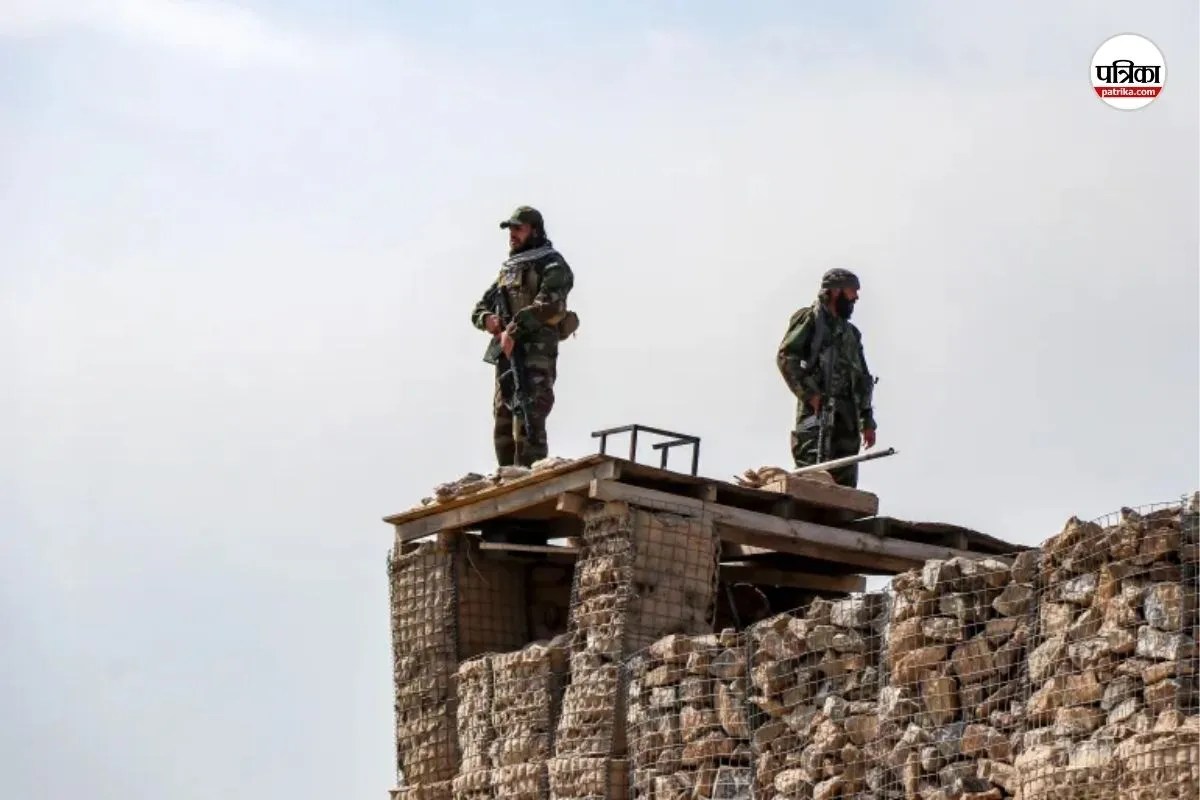
The recent cross-border assault by Pakistani forces into Afghanistan, which left seven dead and over 75 injured, marks a dangerous shift from sporadic border skirmishes to a deliberate policy of kinetic pressure. While Islamabad claims these strikes target militant hideouts, the precision hits on civilian infrastructure and a university in the border provinces tell a different story. This is not just a counter-terrorism operation. It is a desperate, high-stakes attempt by a fractured Pakistani state to force the Taliban’s hand through "coercive diplomacy" at the barrel of a gun.
The strikes represent a spectacular collapse of the decades-long Pakistani strategy of using the Taliban as a strategic proxy. Since the 2021 fall of Kabul, the relationship between the two neighbors has soured, characterized by a bitter cycle of accusations over the Tehrik-i-Taliban Pakistan (TTP) and the disputed Durand Line. By targeting educational institutions and residential areas, Pakistan is signaling that no Afghan space is off-limits if its security demands are not met.
The Myth of Surgical Precision
Pakistan’s military leadership often frames these operations as "surgical strikes" aimed at neutralizing TTP leadership. However, the ground reality in provinces like Khost and Paktika suggests a broader, more indiscriminate objective. When a university becomes a target, the message is sent to the Afghan populace, not just the militants. The intent is to create a domestic crisis for the Taliban, forcing them to choose between their ideological kin (the TTP) and the physical safety of their citizens.
This strategy is fraught with risk. History shows that Afghan nationalism is a potent force that transcends tribal and political divides. Every civilian casualty from a Pakistani drone or artillery shell serves as a recruitment tool for the very groups Islamabad seeks to suppress. It hardens the resolve of the Kabul administration, which now finds itself in the awkward position of needing to defend a border it does not technically recognize, against a neighbor that was once its primary benefactor.
The TTP Paradox
The core of the friction lies in the TTP. Islamabad expected the Afghan Taliban to restrain their Pakistani counterparts as a "return on investment" for years of sanctuary. Instead, the Afghan Taliban view the TTP as their ideological brothers-in-arms who helped them defeat the Western-backed Republic. To Kabul, the TTP are "mujahideen"; to Islamabad, they are "kharijites" or terrorists.
This fundamental disagreement means that diplomacy has hit a brick wall. Pakistan has tried trade blockades, visa restrictions, and mass deportations of Afghan refugees. None of it worked. Now, they have turned to the kinetic option. But using airpower against a guerrilla force embedded in a civilian population is like trying to perform brain surgery with a sledgehammer. You might hit the target, but you will certainly destroy everything around it.
The Internal Collapse Driving External Aggression
To understand why Pakistan is lashing out now, one must look at the internal chaos within its own borders. The country is currently grappling with a trifecta of crises: an economy on life support, a political system in a state of civil war, and a military whose "sacrosanct" reputation is being openly challenged by the public.
When a state faces domestic instability, it often looks for an external enemy to galvanize the masses. By intensifying the conflict with Afghanistan, the Pakistani establishment attempts to shift the narrative. They want to frame the rising domestic insurgency not as a failure of their own internal security policies, but as a foreign-funded conspiracy operating out of Afghan soil. It is a classic diversionary tactic, but it is one that is increasingly losing its efficacy among a cynical Pakistani public.
The Failure of the Border Fence
Pakistan spent billions of dollars and years of labor constructing a massive chain-link fence along the 2,640-kilometer Durand Line. It was sold to the public as a "silver bullet" that would end cross-border movement. The recent strikes prove that the fence is a physical monument to a failed policy. Militants still cross through tunnels, over rugged mountain passes, or simply by bribing local officials.
The fence has done more to alienate the divided Pashtun tribes than it has to stop the TTP. By hardening the border, Pakistan has disrupted the local economies that have existed for centuries. This economic desperation provides a fertile breeding ground for anti-state sentiment. When the military then fires across that same border, they are essentially attacking their own ethnic kinsmen, further destabilizing the volatile Khyber Pakhtunkhwa province.
The Geopolitical Vacuum
The international community’s relative silence on these strikes is telling. With the world's attention fixed on Ukraine and the Middle East, the simmering conflict in the Hindu Kush is viewed as a regional localized headache. This perceived "green light" allows Pakistan to operate with a degree of impunity that would have been unthinkable a decade ago.
However, this vacuum is being filled by other players. China, Pakistan’s "all-weather friend," is increasingly concerned about its investments in the China-Pakistan Economic Corridor (CPEC). The TTP and other separatist groups have repeatedly targeted Chinese nationals. Beijing is losing patience. If Pakistan cannot secure its own territory—even with aggressive cross-border strikes—China may begin to look for alternative security arrangements, potentially even engaging directly with Kabul to protect its interests.
The Taliban’s Limited Options
The Afghan Taliban are in a corner. They lack a functional air force to retaliate in kind, and their economy is too fragile to sustain a full-scale conventional war. Their primary leverage is asymmetrical. They can continue to provide "unintentional" space for the TTP, or they can tighten the screws on the border, making life miserable for Pakistani security forces stationed in the remote outposts.
The Taliban's leadership is also divided. The "pragmatists" in the Foreign Ministry know that they need a stable relationship with Pakistan for trade and international legitimacy. The "hardliners" in Kandahar, however, refuse to bow to Pakistani pressure, seeing it as an affront to Afghan sovereignty. The recent strikes empower the hardliners, making it politically impossible for Kabul to make concessions on the TTP issue without looking like a puppet of Islamabad.
The High Cost of Miscalculation
The targeting of a university is a specific, brutal choice. Education in Afghanistan is already a flashpoint issue, with the Taliban’s own restrictions on women’s schooling drawing global condemnation. When Pakistan bombs an Afghan educational institution, they are not just hitting a building; they are attacking the future of the Afghan state. It creates a narrative of "victimhood" that the Taliban can use to deflect from their own governance failures.
This is a war of attrition where neither side can win a decisive victory. Pakistan can bomb Khost and Paktika every week, but as long as the underlying grievances—the Durand Line dispute, Pashtun disenfranchisement, and ideological sympathy—remain, the insurgency will persist.
A Breakdown of Regional Intelligence
One of the most concerning aspects of the recent strike is the apparent intelligence failure on the Pakistani side. If the goal was to eliminate high-value targets, why were the majority of the casualties students and civilians? This suggests either a reliance on outdated intelligence or a "scorched earth" policy where the distinction between combatant and non-combatant is intentionally blurred.
In the world of intelligence, a "bad hit" is worse than no hit at all. It signals incompetence to your enemies and creates new ones out of the survivors. If the Pakistani military cannot accurately identify and strike its targets, it risks turning the entire border region into a permanent war zone.
The Inevitability of Escalation
The cycle of violence is now self-sustaining. Pakistan strikes, the Taliban retaliates with border fire, the TTP carries out a suicide bombing in Peshawar, and the process repeats. Each iteration of this cycle raises the stakes. We are moving away from "border incidents" and toward a protracted, low-intensity conflict that could easily boil over into a conventional war.
There is no "peace process" currently on the table. The trust between the two capitals has evaporated. Islamabad views the Taliban as ungrateful; Kabul views Pakistan as an aggressor. In this environment, the only language being spoken is that of kinetic force.
The real tragedy is that the victims are almost always the civilians caught in the crossfire. The seven dead and 75 wounded in the latest strike are not strategic thinkers or militant commanders. They are people trying to go to school or earn a living in one of the most neglected corners of the world.
Pakistan's decision to strike deep into Afghan territory is a gamble born of weakness, not strength. It is the action of a state that has run out of ideas and is falling back on the only tool it has left: the military. But in the rugged terrain of the Afghan border, bombs have never been a substitute for a coherent foreign policy.
The university strike proves that the old rules of engagement are gone. Islamabad has decided that the collateral damage is worth the message it sends. The problem is that the message being received in Kabul is not "surrender," but "resist." As the bodies are buried in Khost and the wounded are treated in Paktika, the seeds of the next decade of conflict are being sown.
Pakistan is finding out that it is much easier to start a fire in your neighbor's house than it is to keep the smoke from blowing back into your own.
The border is burning, and neither side has a bucket.