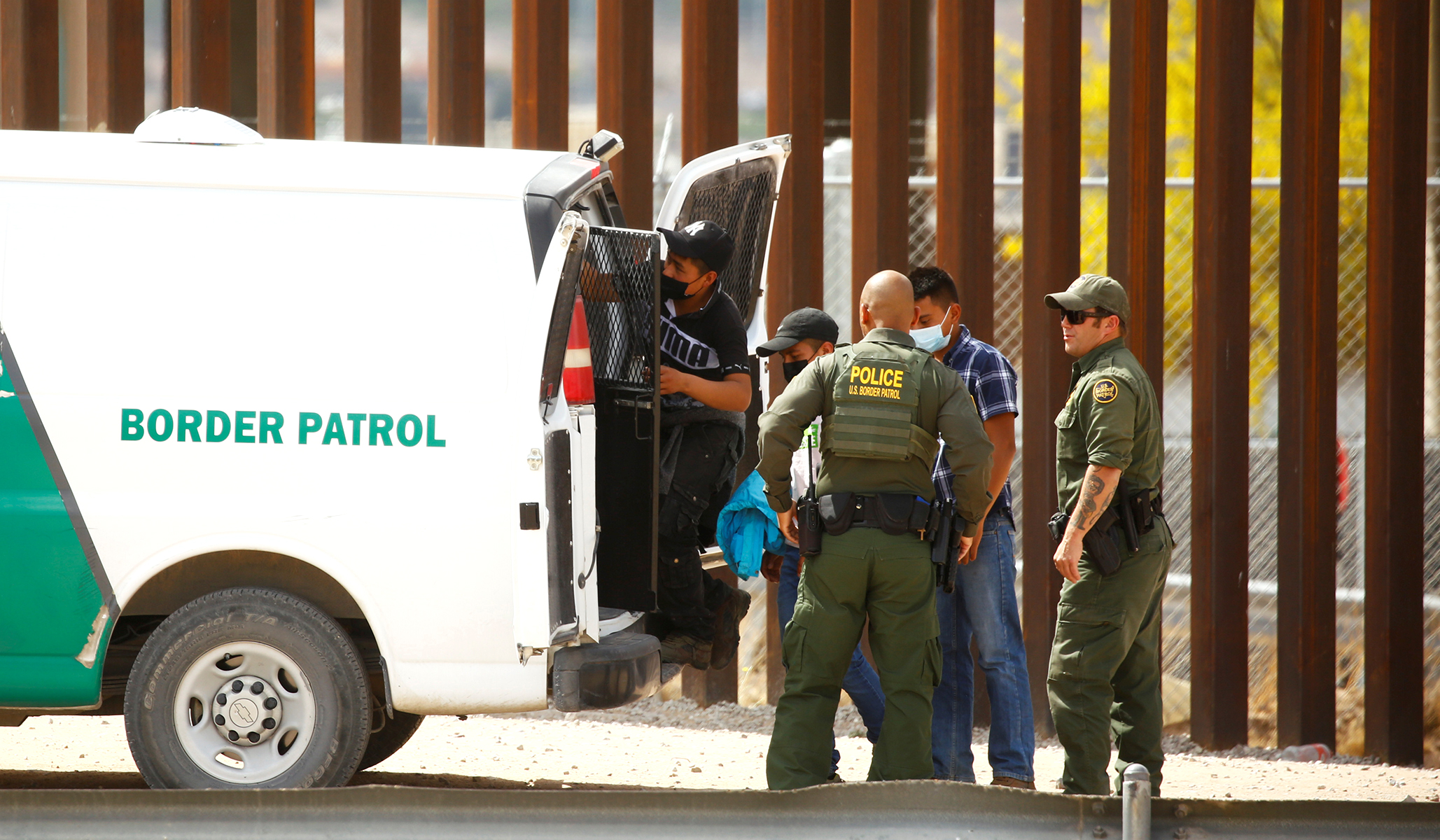
The Senate hearing room is a stage. The nominee for Secretary of Homeland Security is the lead actor. The Senators are the supporting cast, reading from scripts written by lobbyists and special interest groups. While the cameras capture heated exchanges over "border security" and "immigration reform," the reality of our national security remains untouched, buried under layers of performative outrage and bureaucratic inertia.
Most analysts focus on the optics—who looked "tough," who stumbled on a question about visa backlogs, and how many times the word "crisis" was uttered. They miss the point entirely. The confirmation process isn't about finding the best person to lead the Department of Homeland Security (DHS). It is a ritual designed to validate a system that thrives on chaos. If the border were actually secured, the multi-billion dollar industry built around its management would collapse.
The Myth of the Border Fix
Everyone in that hearing room claims they want to "fix" the border. They are lying. Or, at the very least, they are operating under a definition of "fix" that has nothing to do with national sovereignty or economic stability.
The "lazy consensus" in mainstream reporting suggests that the primary obstacle to a secure border is a lack of funding or a specific policy disagreement between parties. This is a fairy tale. I have watched successive administrations pour hundreds of billions of dollars into DHS since its inception in 2002. We have more sensors, more drones, more agents, and more walls than at any point in American history. Yet, the narrative of a "broken" border persists.
Why? Because a "broken" border is profitable.
It is profitable for the private prison contractors who house detainees. It is profitable for the tech firms selling "smart wall" solutions that rarely work as advertised. It is profitable for the NGOs that receive massive federal grants to manage the flow of people. And most importantly, it is profitable for politicians who use the border as a perennial fundraising tool.
The DHS Architecture is the Problem
The Department of Homeland Security is a Frankenstein’s monster of an agency. It was created in a post-9/11 panic by stitching together 22 different government organizations that often have competing missions. Expecting a single nominee to "fix" immigration while also managing the Coast Guard, TSA, FEMA, and the Secret Service is an exercise in futility.
The Senate panel asks questions as if the Secretary has a dial on their desk to control the number of crossings. In reality, the Secretary is a figurehead presiding over a bloated, fragmented bureaucracy where the left hand often has no idea what the right hand is doing.
The Real Metrics of Failure
When we talk about immigration "under the spotlight," we usually look at raw apprehension numbers. These are the most manipulated statistics in Washington.
- High apprehension numbers are framed as a "surge" or "crisis" by the opposition.
- High apprehension numbers are framed as "record-breaking enforcement" by the incumbent.
Both sides use the same data to tell opposite stories. If you want to understand the actual state of the border, stop looking at how many people were caught. Look at the "Gotaway" ratio and the asylum backlog recovery rate.
Most nominees testify that they will "increase efficiency." This is code for "processing people into the interior faster." True border security is not about the speed of processing; it is about the integrity of the perimeter. But you won't hear a nominee admit that, because the modern American economy has become addicted to the shadow labor force that a porous border provides.
The Economics of Evasion
Let’s talk about the data nobody wants to touch. We are told that immigration is a social or humanitarian issue. It isn't. It is a labor market adjustment.
The Senate panel will grill the nominee on "humane treatment," but they won't ask about the downward pressure on wages in the construction, hospitality, and agriculture sectors. They won't ask how a sudden influx of a million people a year affects the cost of low-income housing or the quality of public education in border states.
To acknowledge these factors is to acknowledge that the status quo benefits the donor class at the expense of the working class. The nominee knows this. The Senators know this. So instead, they argue about "pathways to citizenship" and "walls vs. technology." It is a distraction.
The Technological Illusion
The competitor article likely swooned over the mention of "advanced surveillance" or "AI-driven border solutions." This is the newest grift.
"Smart borders" are the ultimate bipartisan cop-out. It allows Democrats to look modern and humane, and Republicans to look tech-forward and secure. In practice, these systems are often buggy, easily bypassed by cartels, and serve primarily as a data-harvesting tool for the companies that build them.
Imagine a scenario where we actually deployed a functional, impenetrable biometric entry-exit system at every port. The system would immediately flag hundreds of thousands of visa overstays—which account for roughly 40% of the illegal population. The government would then be forced to act on that data. But they don't want to act. They want the appearance of monitoring without the burden of enforcement.
The Sovereignty Tax
Every time a nominee sits before that panel, we pay a "sovereignty tax." This is the cost of maintaining the illusion that we are a nation of laws while systematically ignoring those laws whenever they become politically inconvenient.
The DHS Secretary doesn't need more "authority." They need to use the authority they already have. The Immigration and Nationality Act (INA) is remarkably clear on the detention and removal of those entering without inspection. The "discretion" cited by every nominee is usually just a polite word for "defiance."
If a nominee were serious, they would testify that their first act would be to terminate the "catch and release" loopholes that serve as a pull factor for millions. They would testify that they are going to audit the billions sent to NGOs that facilitate the transit of migrants through Central America. But doing so would be a career-ending move.
Dismantling the "Comprehensive" Trap
You will hear the term "Comprehensive Immigration Reform" thrown around during these hearings like a holy relic. It is a trap.
"Comprehensive" is Washington-speak for "a bill so large and filled with pork that no one can read it, and it will never pass." It is the perfect excuse for inaction.
- "We can't secure the border without comprehensive reform."
- "We can't have reform without securing the border."
It is a circular argument that has lasted for thirty years. A real disruptor would demand incremental, verifiable results.
- Secure the physical border first.
- Mandatory E-Verify with actual teeth (fining CEOs, not just the company).
- Reform the asylum system to require applications in the first safe country reached.
The Senate panel won't demand this because it requires accountability. Accountability is the one thing no one in the DHS confirmation process actually wants.
The Cartel Connection
The most glaring omission in these hearings is a serious discussion of the Mexican cartels as paramilitary entities. We treat the border like a police problem. It is a low-intensity conflict.
The cartels control the timing and location of migrant surges to distract Border Patrol, allowing them to move high-value drug shipments through the resulting gaps. When the nominee talks about "resource allocation," they are talking about moving chess pieces on a board where the opponent has already seen their hand.
Treating the cartels as anything less than a national security threat is a dereliction of duty. Yet, the confirmation process treats them as a secondary concern to the administrative logistics of processing "asylum seekers." This isn't a policy failure; it is a strategic surrender.
Stop Asking the Wrong Questions
The media and the Senate are asking: "How will you manage the border?"
The correct question is: "Why are we refusing to enforce the laws already on the books?"
We don't need a new "vision" for DHS. We don't need a "holistic" approach. We need the raw, uncomfortable application of existing statutes.
The nominee will promise "partnership" and "collaboration." They will promise to "work with our regional partners." This is all fluff. The reality is that the United States is the only country in the world that treats its own border as an optional suggestion rather than a definitive boundary.
The hearing is a charade because the outcome is predetermined. The nominee will be confirmed. The policies will remain largely the same. The "crisis" will continue to be managed rather than solved.
If you want to understand what happened in that Senate room, ignore the transcripts. Look at the budget. Follow the money. See who gets the contracts for the next round of "temporary housing" and "surveillance tech."
The border isn't a problem to be solved for the people in that room. It's a resource to be mined.
The theater will continue until the audience—the American taxpayer—stops buying tickets to the show. Until then, don't mistake a confirmation hearing for a search for solutions. It is nothing more than a casting call for the next four years of managed decline.