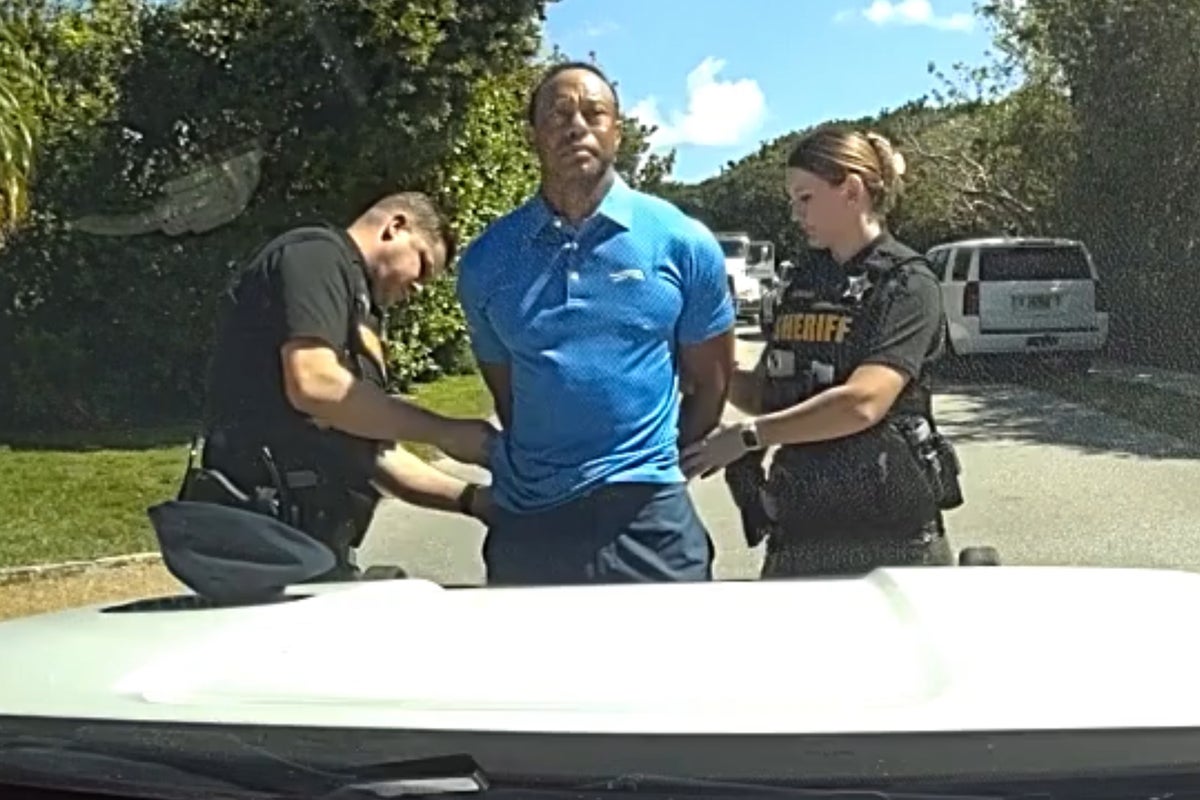
Tiger Woods’ legal team is currently locked in a high-stakes standoff with Florida prosecutors over the release of his private prescription drug records following his May 2017 DUI arrest. While the case began as a standard traffic stop involving a sleeping driver in a damaged Mercedes, it has morphed into a significant constitutional fight over the right to medical privacy. Woods' attorneys are moving to block a subpoena for his medical history, arguing that the state is overreaching by attempting to seize records without a direct link to criminal impairment. This isn't just about a golf legend avoiding a mugshot; it is about whether the government can use a traffic stop as a skeleton key to unlock a citizen's entire pharmacy history.
The Jupiter Incident and the Expansion of State Power
When police found Tiger Woods slumped over his steering wheel in Jupiter, Florida, the immediate assumption was alcohol. The breathalyzer proved otherwise. With a 0.00% blood alcohol level, the investigation shifted toward the "cocktail" of medications Woods later admitted to taking for back pain and insomnia. This shift created a legal opening that Florida prosecutors are now trying to widen into a highway.
The state’s interest is straightforward. They want to prove that Woods was under the influence of controlled substances to a degree that his normal faculties were impaired. However, the methods they are using to gather that evidence represent an aggressive interpretation of Florida’s "investigative subpoena" laws. By demanding access to his records from multiple doctors and pharmacies, the state is bypassing the traditional protections afforded to patient-physician relationships.
Most DUI cases rely on blood or urine samples taken at the time of the arrest. In this instance, the prosecution is looking backward. They are searching for a pattern of use or specific prescriptions that might bolster a case where the physical evidence from the night of the arrest might be thin. This creates a dangerous precedent. If the state can demand your medical history because you failed a field sobriety test, the Fourth Amendment's protection against unreasonable searches begins to look very flimsy.
Why the Privacy Argument Carries Weight
Woods' lawyer, Douglas Duncan, isn't just filing boilerplate motions. He is tapping into a deep-seated Florida legal principle regarding the "right to be let alone." Florida’s state constitution actually provides stronger privacy protections than the U.S. Constitution, specifically mentioning the right to privacy in Article I, Section 23.
Medical records are the holy grail of personal data. They contain a person's vulnerabilities, their history of trauma, and their most private struggles. In the hands of a prosecutor, these records become weapons. For a high-profile figure like Woods, the risk isn't just legal; it’s reputational. Once these records enter the discovery phase of a trial, they often become public record.
The legal threshold for a prosecutor to obtain these records is "relevance." But in a DUI case, what is relevant? Is every prescription written in the last six months relevant? Or only what was in his system that night? The defense argues that the state is on a fishing expedition, hoping to find something—anything—that looks bad to a jury, regardless of whether it actually caused the impairment on the night in question.
The Mechanics of Florida’s DUI Laws
Florida law regarding driving under the influence is notoriously strict, particularly when drugs are involved. Unlike alcohol, where a .08 blood alcohol level is a "per se" violation, drug impairment is subjective. The state must prove that the driver was "under the influence... to the extent that [their] normal faculties are impaired."
The Role of the Drug Recognition Expert (DRE)
In many of these cases, the prosecution relies on a Drug Recognition Expert. This is a police officer trained to identify signs of drug use through a series of physical tests. These tests are often criticized as "junk science" by defense attorneys because they rely on the officer’s subjective observations rather than a laboratory's hard data.
When the DRE's observations don't align perfectly with the toxicology report, prosecutors look for the medical records to bridge the gap. If an officer says the driver had "sluggish pupils" and the medical records show a prescription for an opioid, the prosecution has a narrative. Without those records, the officer’s observation is just an opinion.
The Hidden Danger for Chronic Pain Patients
This case highlights a terrifying reality for millions of Americans who suffer from chronic pain. Tiger Woods has undergone multiple back surgeries. He is a man whose body has been shattered and rebuilt. His reliance on pain medication is not a secret, nor is it necessarily a crime.
If the state successfully obtains Woods' records, it sends a message to every patient in Florida: your medical history is only one traffic stop away from being scrutinized by the government. This is especially concerning for those on medication-assisted treatment or those managing psychiatric conditions. The stigma of certain medications can be enough to sway a jury, even if the dosage was therapeutic and not impairing.
The prosecution’s argument rests on the idea that public safety outweighs individual privacy. They argue that if someone is on the road, the state has a "compelling interest" in knowing what is in their system. But "compelling interest" is a high bar. It shouldn't be used as a shortcut to bypass the need for a warrant based on probable cause.
Strategic Maneuvers in the Courtroom
The upcoming hearing will likely focus on whether the state has provided enough evidence to justify the "nexus" between the records and the crime. Judge Howard Coates will have to decide if the state’s request is narrowly tailored.
In high-profile cases, the defense strategy is often about delay and containment. By fighting the records release, Duncan is forcing the state to prove its case with the evidence it already has. If the medical records are suppressed, the state is left with a video of a confused man who couldn't walk a straight line—a powerful image, but one that can be explained away by sleep deprivation, back pain, or an accidental reaction to a new medication.
The Problem with Public Records Laws
Florida has some of the most transparent public records laws in the country, often referred to as "Sunshine Laws." While great for government accountability, they are a nightmare for privacy in criminal cases. If the state obtains the records and files them as evidence, they could potentially be accessed by the media.
This is why the defense is fighting so hard at this specific stage. Once the toothpaste is out of the tube, you can't put it back in. The "reconstruction" of Tiger Woods' image depends on keeping his private medical struggles private.
A Precedent for the Digital Age
While this case involves paper and digital pharmacy logs, it sets the stage for how we handle bio-data in the future. As we move toward a world where wearable tech tracks our every heartbeat and blood sugar spike, the question of who owns that data—and who can see it—becomes paramount.
If a driver’s heart rate spikes before an accident, can the state subpoena their Apple Watch data? If a driver is erratic, can the state demand their sleep-tracking logs to prove they were drowsy? The Tiger Woods case is the opening salvo in a much larger war over the "quantified self" and the government's access to it.
The prosecution is currently banking on the public’s desire to see a celebrity held accountable. They want the "win." But a win for the prosecution here is a loss for the expectation of privacy for every Floridian. The law shouldn't change just because the defendant is a billionaire with fifteen major championships.
The Burden of Proof and the Road Ahead
The state’s case is currently built on a foundation of "could have been." He could have been impaired. He could have been abusing his prescriptions. But "could have been" isn't the standard for a criminal conviction. By seeking the medical records, the state is admitting that its current evidence might not be enough to secure a "beyond a reasonable doubt" verdict.
Woods has already entered a diversion program for first-time DUI offenders in some jurisdictions, but the legal maneuvers around his records suggest a much longer game is being played. If his lawyers win this motion, it effectively guts the prosecution's ability to paint him as a "pill-popper" in the eyes of the public.
The final decision will likely come down to a balancing act. The court must balance the state’s duty to prosecute impaired drivers with the individual’s right to keep their medical history between them and their doctor. If the scales tip too far toward the state, the doctor's office ceases to be a sanctuary and becomes just another wing of the police department.
The state needs to prove impairment at the moment of the stop, not a history of treatment for a legitimate medical condition.
Keep your eyes on the "Notice of Investigative Subpoena." That is the document that will determine if Tiger Woods' most private details become a matter of public record.
Regardless of the outcome, the case has already exposed a massive rift in Florida’s legal system. The fight for Tiger Woods’ pharmacy records isn't about golf, and it isn't even really about a DUI anymore. It is a battle over the boundary between the public street and the private body. That boundary is currently being redrawn in a Florida courtroom, and the implications will be felt long after the headlines fade.
Demand to see the probable cause before handing over your life's history to the state.