The Philippine coastline isn't just a vacation spot anymore. It’s the front line of a massive geopolitical shift. If you’ve been watching the news, you know Balikatan 2026 isn't your grandfather’s military exercise. It’s bigger, louder, and frankly, a lot more serious than previous years. We’re seeing a level of coordination between the US, Japan, and the Philippines that would have seemed impossible a decade ago.
This year, the drills have moved beyond basic disaster relief or counter-terrorism. They’re practicing for high-end, conventional conflict. When thousands of troops descend on Palawan and the northern provinces of Luzon, they aren't just there to clean up beaches. They’re sending a message that the South China Sea isn't a private lake. For another perspective, check out: this related article.
Why Japan Joining Balikatan Changes Everything
For years, Balikatan was a bilateral affair. It was a "shoulder-to-shoulder" dance between Washington and Manila. Not anymore. Japan’s presence as a full participant marks a massive departure from their post-war pacifism. It’s a move born of necessity, not choice. Tokyo realizes that if the South China Sea falls under total Chinese control, their own supply lines are toast.
Japan is bringing more than just observers this time. They’re integrating their Self-Defense Forces into complex amphibious landing drills. You’re seeing Japanese ships docked in Subic Bay alongside US carriers. This trilateral cooperation creates a "tripwire" effect. It means any aggression in these waters doesn't just provoke the US; it pulls in the third-largest economy in the world. Related reporting on this matter has been provided by Reuters.
Critics say this is provocative. Maybe it is. But from where Manila stands, it’s about survival. The Philippines has been pushed around at Second Thomas Shoal for years. They’ve had lasers pointed at their sailors and water cannons smashing their wooden resupply boats. By bringing Japan into the fold, the Philippines is essentially telling Beijing that the cost of bullying just went up. Way up.
The Hardware and the Strategy on the Ground
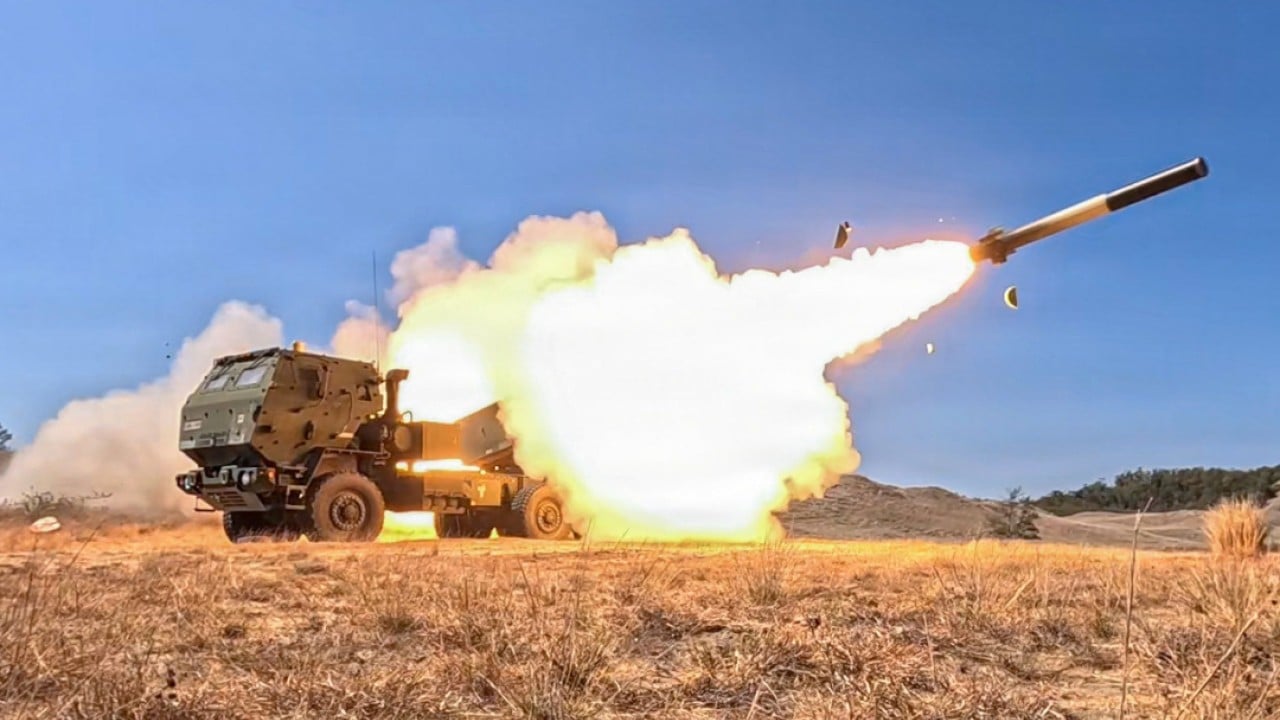
Forget the old M113 armored personnel carriers. Balikatan 2026 is a showcase of tech that feels like it’s straight out of a defense expo. We’re talking about HIMARS (High Mobility Artillery Rocket Systems) being moved rapidly between small islands. The goal is "Lethal Multi-Domain Operations." That’s military speak for being able to hit targets from the land, sea, and air simultaneously.
The US Marine Corps is testing its new Littoral Regiment concept here. This is a big deal. Instead of big, slow targets, the Marines are breaking into small, mobile teams. They carry anti-ship missiles and drone swarms. They hide in the jungle, fire at a fleet, and move before anyone knows they were there. It’s guerrilla warfare scaled up for the 21st century.
- Integrated Air Defense: They’re linking Philippine sensors with US Patriot missile batteries.
- Drone Swarms: Using low-cost autonomous aircraft to map out "enemy" positions in real-time.
- Submarine Hunting: P-8 Poseidon aircraft are circling the Luzon Strait, looking for quiet threats beneath the waves.
The logistics alone are a nightmare. Moving fuel, ammo, and food across an archipelago is incredibly hard. That’s exactly why they’re doing it. If you can’t feed your troops in a drill, you’re definitely not doing it in a war. They’re building piers, repairing runways, and setting up fuel depots in remote areas. It’s called "Enhanced Defense Cooperation Agreement" (EDCA) sites in action. These aren't permanent bases, but they’re ready to go at a moment's notice.
Manila is No Longer Playing Both Sides
For a long time, the Philippines tried to play the US and China against each other. They wanted American security and Chinese investment. That era is dead. The current administration in Manila has realized that Chinese promises of "Belt and Road" billions often come with strings—or just never show up at all.
I’ve talked to people who follow this closely, and the consensus is clear. The Philippine public is tired of seeing their fishermen harassed. There’s a renewed sense of national pride tied to maritime sovereignty. Balikatan provides a psychological boost. It shows the average Filipino that they aren't standing alone against a superpower.
Is it risky? Absolutely. Beijing has already called these exercises a threat to regional peace. They’ve warned of "consequences." But honestly, what’s the alternative? Rolling over hasn't worked. The "gray zone" tactics used by China—using coast guard and "fishing" vessels to seize territory—only stop when they hit a hard wall. Balikatan 2026 is that wall.
The Reality of Island Hopping in 2026
Modern warfare in the Pacific looks nothing like the massive carrier battles of World War II. It’s about "A2/AD" or Anti-Access/Area Denial. China has spent twenty years building a "Great Wall of Sand" with missiles that can sink a carrier from 1,000 miles away.
To counter this, the US and its allies are perfecting the art of being everywhere and nowhere. During these drills, you’ll see Ospreys landing on dirt strips and C-130s dropping supplies into the ocean. It’s chaotic. It’s messy. It’s also the only way to operate in a contested environment.
The inclusion of the Australian Defense Force and observers from across Southeast Asia and Europe shows this isn't just a regional spat. It’s a global concern. The sea lanes passing through the Philippines carry trillions of dollars in trade. If those lanes close, your gas prices go up, your tech gets more expensive, and the global economy takes a nosedive.
What This Means for the Rest of the Year
Expect the tension to stay high. After the troops pack up and go home, the "presence" remains. The US is leaving behind equipment in those EDCA sites. Japan is finalizing a Reciprocal Access Agreement (RAA) with the Philippines, which will make these joint drills even easier to organize.
If you’re tracking this, watch the Scarborough Shoal. That’s the next potential flashpoint. Balikatan is meant to deter a move there, but it could also trigger a "use it or lose it" mentality in Beijing.
Stop thinking of these as just "games." They’re rehearsals. The map of the Pacific is being redrawn in real-time, and the Philippines is right at the center of the ink.
If you want to stay ahead of this, keep an eye on the specific locations of the next "maritime cooperative activities." The closer they get to the disputed features, the higher the temperature. You should also watch for the next trilateral summit. When the leaders of the US, Japan, and the Philippines sit in a room together, they aren't just talking about trade. They’re talking about the line in the sand—or in this case, the water.
Check the shipping lane reports and the Philippine Coast Guard’s daily briefings. They’re the ones dealing with the "water cannon diplomacy" every single day. The exercises provide the muscle, but the daily patrols are where the sovereignty is actually defended. Watch that space.