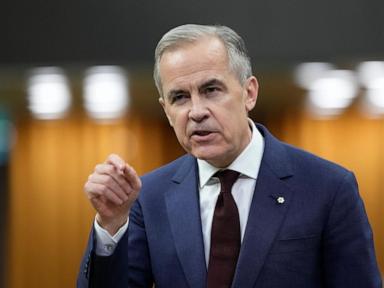
Canada’s current trade posture represents a critical failure in risk diversification, where a singular reliance on the United States has transitioned from a competitive advantage into a systemic vulnerability. The Prime Minister’s recent characterization of these economic ties as a "weakness" is not merely political rhetoric; it is a late-stage recognition of Asymmetric Interdependence. When one nation’s GDP is 75% dependent on exports to a single neighbor while that neighbor views the trade as a marginal percentage of its own economic activity, the smaller partner loses all price-setting power and regulatory autonomy. This structural imbalance creates a "Sovereignty Trap" where Canadian domestic policy must perpetually bend to accommodate American legislative shifts or face immediate industrial paralysis.
The Triad of Over-Reliance
The fragility of the Canadian economy is rooted in three distinct structural pillars that have historically prioritized short-term logistical ease over long-term strategic resilience.
1. The Monopsony Constraint
In economic terms, Canada operates within a near-monopsony for its primary exports. While Canadian oil, minerals, and automotive components are sold globally in theory, the physical infrastructure—pipelines, rail lines, and integrated supply chains—is hard-wired toward the South. This creates a bottleneck where the buyer (the U.S.) dictates the terms of trade. Because Canada lacks the "Outside Option" required for effective negotiation, it accepts a permanent discount on its resources, notably seen in the Western Canadian Select (WCS) price differential against West Texas Intermediate (WTI).
2. Regulatory Path Dependency
To maintain "seamless" border transitions, Canada has historically mirrored U.S. regulatory standards. While this reduces friction for the Just-In-Time (JIT) manufacturing models used in the Great Lakes region, it strips the Canadian government of the ability to diverge on environmental, labor, or digital privacy laws without triggering trade retaliations. The U.S. effectively exports its legislative will across the border, making Ottawa a "rule-taker" rather than a "rule-maker."
3. Capital Exposure and Branch-Plant Vulnerability
A significant portion of Canadian industrial capacity is composed of "branch plants" for American multinationals. In periods of economic contraction or protectionist surges—such as the tightening of "Buy American" provisions—these satellites are the first to be shuttered. Capital flows are dictated by the headquarters in Detroit, Houston, or Silicon Valley, meaning Canada’s labor market is effectively a derivative of American corporate strategy.
The Cost Function of Protectionism
The shift in Washington toward a "Fortress America" stance, spanning both Democratic and Republican administrations, has fundamentally altered the cost function of the Canada-U.S.-Mexico Agreement (CUSMA). The logic of the 1990s—that integration equals efficiency—has been superseded by the logic of the 2020s: that integration equals exposure.
The primary mechanism of this exposure is the Protectionist Feedback Loop. When the U.S. implements subsidies (such as those in the Inflation Reduction Act), Canada is forced to either match those subsidies at an unsustainable cost to the national treasury or witness a mass exodus of its industrial base. This creates a fiscal drain where Canada pays a "loyalty tax" simply to maintain its existing market share. The math is brutal: Canada’s smaller tax base cannot win a subsidy war against the world’s largest economy, yet it cannot afford to lose.
The Mechanism of Diversification: Breaking the Gravity Model
Standard economic theory suggests the "Gravity Model of Trade," which posits that nations trade most with those who are geographically closest and economically largest. To "correct" the weakness identified by the Prime Minister, Canada must actively fight the physics of this model. This requires more than signing treaties; it requires a fundamental re-engineering of the national value chain.
Strategic Decoupling through Trans-Pacific and European Hubs
Diversification has failed in the past because Canada attempted to export the same raw goods to different buyers. For China or Europe to become viable counterweights to the U.S., Canada must transition from exporting commodities to exporting high-complexity goods. High-value-to-weight ratios allow products to bypass the geographic disadvantage of being far from the buyer. If a product is a bulk commodity like bitumen, the U.S. is the only logical buyer. If the product is a specialized aerospace component or a proprietary biotech solution, the "Gravity Model" weakens, and global markets become accessible.
The Infrastructure Bottleneck
The physical reality of Canadian trade is that it is built on a North-South axis. Most major rail lines and highways are designed to feed into American hubs. To pivot, Canada requires a massive capital reallocation toward West Coast and East Coast port infrastructure. Without the ability to move volume to the Indo-Pacific or the EU at a competitive per-unit cost, "diversification" remains a theoretical concept rather than an operational reality.
Quantifying the Risk of Transition
Correcting this weakness is not a Pareto improvement; there are significant losers in this transition.
- Logistical Friction: Moving away from the U.S. market increases shipping times and costs, which could lead to an initial spike in domestic inflation as cheaper American imports are replaced or diverted.
- Geopolitical Friction: The U.S. views "strategic autonomy" in its neighbors with suspicion. Any Canadian move to deepen ties with competitors—specifically in the Indo-Pacific—will be met with "Security Review" hurdles and potential tariff threats from Washington.
- Capital Flight: During the transition phase, investors may see Canada as a "nation without a clear market," leading to a weakening of the Canadian Dollar ($CAD$) and a reduction in Foreign Direct Investment (FDI).
The Strategic Reorientation
To transform this structural weakness into a resilient framework, the Canadian state must move beyond the role of a facilitator and into the role of a strategic architect. The following tactical shifts are required to mitigate the Sovereignty Trap:
- Intellectual Property (IP) Aggregation: Canada must shift its economic focus from resource extraction (which is geographically tied to the U.S. pipeline) to IP-heavy industries. IP can be licensed globally and does not rely on physical border crossings, making it the ultimate tool for decoupling from the U.S. manufacturing cycle.
- Critical Mineral Sovereignty: Canada possesses the raw materials necessary for the global energy transition (Lithium, Cobalt, Nickel). Instead of selling these raw materials to American processors, Canada must mandate domestic "Value-Add" processing. This creates a global dependency on Canada, providing the leverage needed to negotiate better terms within the North American bloc.
- Bilateral "Mini-Lateralism": Rather than relying solely on large, slow-moving trade blocs like the CPTPP, Canada should pursue hyper-specific bilateral agreements focused on critical sectors (e.g., a green hydrogen partnership with Germany or a semiconductor supply agreement with Taiwan). This creates a web of dependencies that dilute the U.S. share of the Canadian economy.
The Prime Minister’s assessment is an admission that the era of "Passive Integration" is over. The "weakness" is not the relationship itself, but the lack of an exit strategy. Canada’s objective should not be to sever ties with the U.S., but to ensure that the U.S. is no longer the only buyer with the power to crash the Canadian economy with a single executive order. Resilience is found in the ability to walk away from the table; until Canada builds that capacity through infrastructure and IP, it remains a vassal state to American volatility.
Final strategic play: Pivot the national industrial strategy toward "Market Agnostic" goods—software, specialized chemicals, and processed minerals—while simultaneously investing in deep-water port capacity to ensure that "The Outside Option" is a credible threat in all future trade negotiations with Washington.